Daijiworld Media Network - Mumbai
Mumbai, Dec 4: A major infrastructure milestone was achieved in the city on Tuesday as Chief Minister Devendra Fadnavis inaugurated the launch of a Tunnel Boring Machine (TBM) for Mumbai’s deepest road tunnels — a twin-tunnel project connecting Orange Gate and Marine Drive in south Mumbai.
Work has officially begun on the 9.96-km tunnels, which will run at depths ranging from 12 to a staggering 50 metres below ground, reaching their deepest point beneath the iconic Chhatrapati Shivaji Maharaj Terminus (CSMT). The second TBM is set to arrive within the next two weeks, officials confirmed.
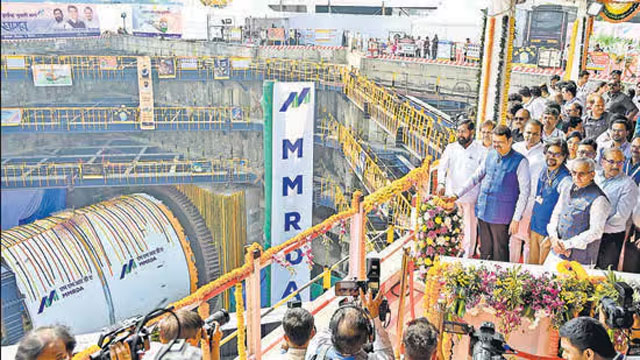
Estimated at Rs 8,056 crore, the tunnels are slated for completion by December 2028 — though the Chief Minister has urged authorities to fast-track the deadline to June 2028. Once operational, the route is expected to cut travel time between Orange Gate and Marine Drive by 15–20 minutes, significantly decongesting traffic in south Mumbai.
Fadnavis highlighted the conservation benefits of the project, saying, “This road tunnel will save 700 structures from getting impacted by the project, many of them heritage ones.” He added that the tunnels would save “thousands of hours for thousands of people.”
The tunnels, being built by Larsen & Toubro for the Mumbai Metropolitan Region Development Authority (MMRDA), will serve as a key alternative route for commuters heading towards the Navi Mumbai International Airport, especially those from the western and central suburbs.
As part of a larger connectivity master plan, MMRDA is also working on the Worli–Sewri Elevated Corridor to link the Bandra-Worli Sea Link with the Mumbai Trans-Harbour Link (Atal Setu), enhancing seamless travel across the city and into Navi Mumbai.
Of the nearly 10-km stretch, around 7 km will run underground, passing beneath densely populated zones and cutting across Central and Western Railway lines as well as Metro Line 3. Each tunnel will house two 3.2-metre traffic lanes and a 2.5-metre emergency lane, with a maximum speed limit of 80 km/h.
For commuter safety, cross passages will be placed every 300 metres, supported by fire-resistant systems, advanced lighting arrangements, and modern traffic management technology.
Once complete, the twin tunnels will integrate with both the coastal road project and Atal Setu — marking yet another transformative step in reshaping Mumbai’s transport landscape.