Daijiworld Media Network - Washington
Washington, Feb 26: US secretary of state Marco Rubio said Washington is investigating a reported maritime shooting incident near Cuba after authorities in Havana alerted US officials to what he described as a rare episode involving “shootouts on open sea.”
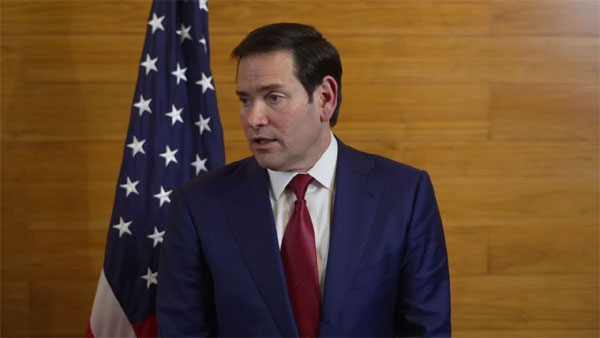
Speaking to reporters in Saint Kitts and Nevis on Wednesday (local time), Rubio said the United States was informed earlier in the day about an incident off Cuba’s coast and had immediately begun reviewing the matter.
According to Rubio, multiple US agencies — including the Department of Homeland Security and the US Coast Guard — are examining the available information. However, he noted that most of the details currently known to Washington have come from Cuban authorities.
The US embassy in Havana is seeking access to individuals involved in the incident to determine whether any are American citizens or lawful permanent residents. Rubio added that Cuban officials indicated the vessel involved was registered in Florida, a claim US authorities are working to independently verify.
Rubio declined to speculate on the circumstances until US agencies complete their review. “We’re going to find out exactly what happened here, and then we’ll respond accordingly,” he said, while also clarifying that no US government operation was involved.
He noted that communication channels between Cuba’s border guards and the US Coast Guard remain active, and that Cuban officials had notified their US counterparts earlier in the day. Still, Rubio stressed that Washington would reach its own conclusions rather than rely solely on Havana’s account.
Describing the reported exchange of gunfire as highly unusual, Rubio said such incidents at sea involving Cuba have not occurred in a very long time.
Venezuelan Oil Sales and Cuba’s Private Sector
In the same briefing, Rubio addressed US policy regarding Venezuelan oil sales to Cuba’s private sector for humanitarian purposes. He emphasised that commercial transactions with Cuba’s private businesses have long been permitted, provided they do not involve the Cuban government or military-linked entities such as GAESA.
Rubio characterised Cuba’s private sector as limited in scale and argued that the island’s broader economic crisis stems from structural issues. He warned that any diversion of fuel supplies from private actors to state or military-controlled entities would result in revoked permissions.
Broader Regional and Global Context
Relations between the United States and Cuba have remained strained for decades, shaped by the US trade embargo and recurring migration waves, including maritime crossings toward Florida. Incidents in the Florida Straits are often treated as high-risk due to the potential for humanitarian emergencies and border-security complications.
Rubio also previewed potential diplomatic engagement with Iran, stating that President Donald Trump prefers diplomacy but warning that Iran’s ballistic missile capabilities pose a serious threat. Iran’s nuclear programme has long been the focus of international negotiations and sanctions, with disputes frequently centring on enrichment limits, verification mechanisms and whether missile systems should be included in any agreement.