Daijiworld Media Network - Tehran
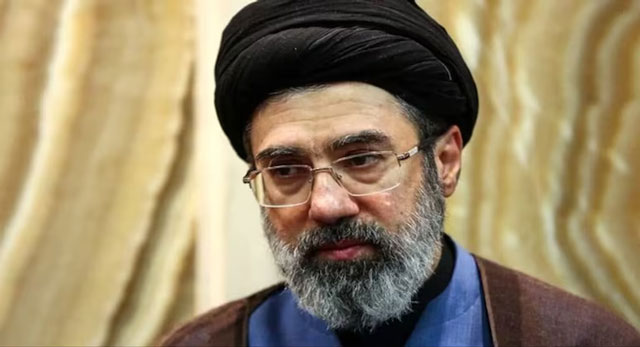
Tehran, Mar 4: Mojtaba Khamenei, son of late Iranian Supreme Leader Ali Khamenei, has reportedly been selected as Iran’s new Supreme Leader by the Assembly of Experts, according to a report by Iran International on Tuesday.
Citing informed sources, the outlet stated that the 56-year-old cleric was elected by the powerful constitutional body responsible for appointing and overseeing the Supreme Leader. Mojtaba, the second-eldest son of Ali Khamenei, had long been viewed by political observers as a potential successor within the Islamic Republic’s power structure.
The reported appointment comes just days after Ali Khamenei was killed in a wave of joint US-Israeli strikes, an incident that has since escalated into a wider armed conflict across the Middle East. However, there has been no official confirmation from Iranian state media or authorities regarding the development.
If confirmed, the move could trigger political debate within and outside Iran, as the Islamic Republic has consistently projected itself as an alternative to hereditary monarchy. A father-to-son transition at the apex of power may raise questions about that long-held principle.
The report further claimed that the Islamic Revolutionary Guard Corps (IRGC) played a decisive role in the selection process, allegedly exerting significant pressure on members of the Assembly of Experts to back Mojtaba’s candidature. The IRGC, which serves as a powerful military and political force in Iran, was designated a terrorist organisation by the United States in 2019.
Under Iran’s Shiite theocratic system, the Supreme Leader holds ultimate authority over all branches of government and serves as commander-in-chief of the armed forces, including the IRGC. During Ali Khamenei’s tenure, the Revolutionary Guard expanded its influence across political, military and economic spheres.
Mojtaba Khamenei is described as a mid-ranking cleric who served in Iran’s armed forces during the Iran-Iraq war and is believed to have maintained close ties with the Revolutionary Guard. Analysts have long regarded him as a key behind-the-scenes power broker who reportedly managed the Office of the Supreme Leader in practice in recent years.
Further developments are awaited as regional tensions continue to rise.