Daijiworld Media Network - Washington
Washington, Mar 19: Senior defence and maritime officials in the United States have cautioned lawmakers that the country lacks a robust commercial shipping base to support military operations during a crisis, highlighting a growing vulnerability in logistics and force deployment.
Speaking at a congressional hearing on mobility readiness, Maritime administrator Steve Kamall described the issue as a deep-rooted structural problem rather than a temporary downturn. He noted that the US has not produced a commercial ship for the global market since 1960 and currently operates only about 80 vessels under its international fleet.
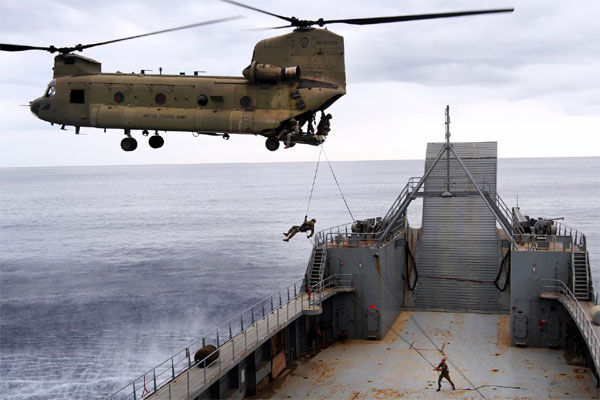
Kamall stressed that the central challenge lies in the lack of cargo volume needed to sustain a viable maritime ecosystem. Without sufficient access to trade, he said, it becomes difficult to maintain shipbuilding, repair infrastructure, and fleet expansion. He warned that existing initiatives such as the Maritime Security Programme and the Tanker Security Programme are under strain due to limited cargo support.
Echoing these concerns, Randall Reed, commander of the United States Transportation Command, emphasised that commercial cargo is critical to maintaining sealift capacity and trained crews. While current resources may suffice for an initial military surge, he cautioned that sustaining operations during a prolonged conflict would be significantly more challenging.
Reed also highlighted broader concerns about ageing military transport assets. He pointed out that the Boeing C-17 Globemaster III fleet has an average age of around 22 years, raising concerns about future readiness if replacements are delayed. He added that continued investment in the Boeing KC-46 Pegasus programme is crucial, even as older Boeing KC-135 Stratotanker planes remain in service.
Officials reiterated that the country’s merchant marine plays a dual role—supporting both commercial trade and military logistics.
However, they stressed that strengthening the commercial shipping sector is essential to ensuring long-term defence readiness.
The discussion reflects ongoing concerns within the Pentagon that the nation’s ability to transport troops, equipment, and supplies across long distances is increasingly constrained by an ageing fleet and a shrinking maritime base.
In modern warfare, logistics—including sea and air transport as well as fuel supply—remains a decisive factor. For the US, particularly in strategically significant regions like the Indo-Pacific, maintaining reliable long-distance deployment capabilities is seen as critical to both deterrence and sustained military operations.