Daijiworld media Network – New Delhi
New Delhi, Apr 2: Prime Minister Narendra Modi on Wednesday directed an “all-out effort” to safeguard Indian citizens from the fallout of the ongoing West Asia conflict, while emphasising the need for timely and authentic public communication to curb misinformation.
Chairing a high-level meeting of the Cabinet Committee on Security (CCS), the prime minister reviewed the preparedness of various ministries in dealing with the evolving crisis triggered by hostilities involving the US, Israel and Iran.
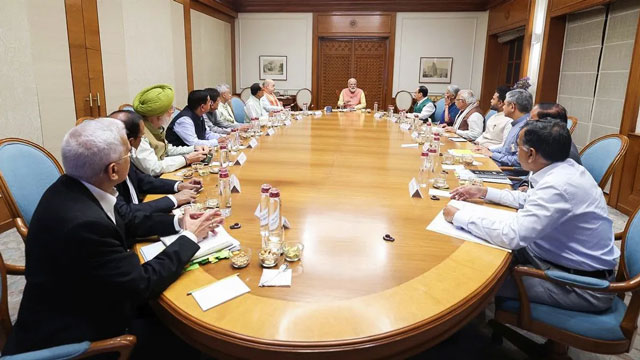
According to a statement from the Prime Minister’s Office, Modi assessed the availability of essential commodities and directed departments to take all necessary steps to minimise the impact on citizens and key sectors. This was the second such CCS meeting on the issue, following an earlier review on March 22.
The prime minister highlighted the importance of ensuring a smooth flow of credible information to the public to prevent rumour-mongering and panic amid global uncertainty.
Key sectors including energy, agriculture, fertilisers, aviation, shipping and logistics were reviewed during the meeting. Cabinet Secretary TV Somanathan briefed the panel on measures being taken to maintain supplies of petroleum products, including LPG and LNG, with sourcing being diversified across multiple countries.
Officials said domestic LPG prices remain stable, while strict enforcement measures are in place to curb hoarding and black marketing. Additional steps such as expanding piped natural gas connections and boosting coal supplies to thermal power plants are also being implemented to ensure uninterrupted power during peak summer demand.
On the agriculture front, efforts are underway to maintain adequate fertiliser supply by sustaining urea production and coordinating imports of DAP and NPKS. State governments have been asked to intensify monitoring and take strict action against diversion and hoarding.
The government is also closely monitoring food prices, which have remained stable over the past month. Control rooms have been set up to coordinate with states and Union Territories under the Essential Commodities Act.
Officials noted that India is actively working to diversify global supply chains for energy and fertilisers, while also engaging in diplomatic efforts to ensure safe passage of vessels through the strategically vital Strait of Hormuz, a key artery for global energy trade.
The meeting was attended by senior ministers including Amit Shah, S Jaishankar, Nirmala Sitharaman, Piyush Goyal, Shivraj Singh Chouhan, JP Nadda and Ashwini Vaishnaw, along with National Security Advisor Ajit Doval.
With nearly 20 per cent of the world’s energy passing through the Strait of Hormuz, disruptions caused by the conflict have significantly impacted global supply chains. The government reiterated that continuous diplomatic engagement and strategic planning are underway to mitigate risks and ensure national stability.