Daijiworld Media Network - Washington
Washington, Apr 4: The dangers faced by fighter pilots operating in hostile territories have once again come into sharp focus following reports of an F-15E Strike Eagle crash in Iran. While one of the two ejected pilots has been rescued, the other remains missing, with search efforts believed to be underway in the rugged Zagros Mountains.
The incident has highlighted the critical role played by the advanced survival systems developed by the United States Air Force, designed to enhance a pilot’s chances of survival in extreme conditions.
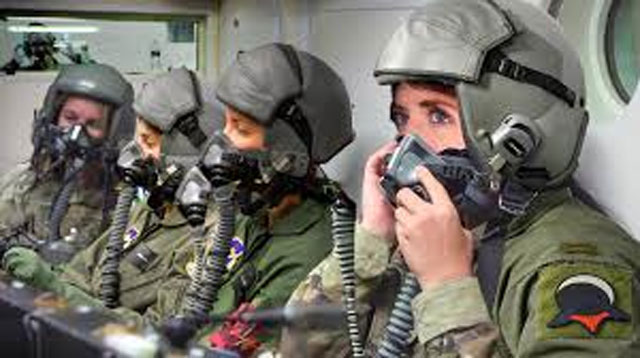
According to available information, the survival mechanism is not confined to a single kit but is a comprehensive, multi-layered system. It includes a survival pack attached to the ejection seat, a vest worn by the pilot, and additional equipment such as helmets, communication devices, and protective gear. These are structured around the principles of SERE — Survival, Evasion, Resistance, and Escape.
Pilots undergo rigorous SERE training, equipping them to withstand harsh environments, evade enemy forces, and make critical decisions under pressure. The training emphasises self-reliance and adaptability, ensuring that survival does not depend solely on equipment.
Sources indicate that the survival kit deployed during ejection serves as a lifeline once the pilot lands. It contains essential communication and navigation tools, including survival radios, GPS beacons, compasses, and signal mirrors, enabling pilots to establish contact with rescue teams and relay their location.
In addition, signalling devices such as flares, smoke bombs, strobe lights, and glow sticks are included to assist search operations, particularly in low-visibility conditions.
The kit also caters to basic survival needs, providing water packets, purification tablets, and high-energy food supplies capable of sustaining a pilot for several days. First-aid materials, including bandages and tourniquets, help manage injuries sustained during ejection or landing.
To withstand environmental challenges, the system incorporates thermal blankets, ponchos, and fire-starting tools, ensuring protection against extreme weather conditions.
For sea landings, specialised equipment such as inflatable life rafts and “sea dye” is included to improve visibility and facilitate rescue operations.
While evasion remains the priority, pilots may also carry compact firearms strictly for self-defence as a last resort.
Notably, the system is modular in nature, allowing it to be customised based on mission requirements and terrain, whether in deserts, mountains, Arctic regions, or maritime zones.
As search operations continue in Iran, the effectiveness of this advanced survival system, combined with extensive training, remains crucial in determining the fate of the missing pilot.