Daijiworld Media Network - New Delhi
New Delhi, Jun 2: In a significant ruling reinforcing gender equality, the Supreme Court has held that a married daughter cannot be denied appointment as a fair price shop dealer on compassionate grounds solely because of her marital status, declaring such exclusion unconstitutional and discriminatory.
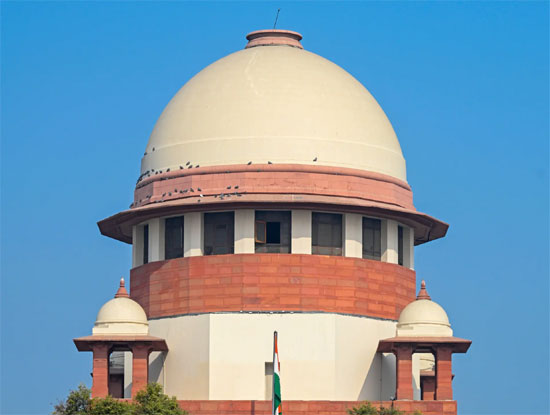
A Bench comprising Justices P. S. Narasimha and Alok Aradhe allowed an appeal filed by Kulsum Nisha, overturning decisions of the Allahabad High Court and local administrative authorities that had rejected her application for a fair price shop licence after the death of her mother.
Nisha had sought allotment of the shop under the dependent quota following her mother's demise. However, her claim was denied under a Uttar Pradesh government policy that excluded married daughters from the definition of "family" for such appointments.
Examining the constitutional validity of the provision, the apex court observed that the objective of compassionate allotment is to provide financial relief to families facing hardship after the death of a dealer. The judges noted that factors such as dependency, financial condition, residence and the applicant's ability to run the shop are relevant considerations, while marital status has no direct connection to any of these criteria.
The court strongly criticised the assumption that a daughter ceases to belong to her parental family after marriage, describing it as a gender-based stereotype that has no place in a constitutional democracy.
According to the judgment, marriage does not sever a daughter's relationship with her parental family, nor can it automatically determine whether she remains dependent on them. The court clarified that dependency is a factual issue that must be assessed on a case-by-case basis rather than presumed from marital status.
The Bench also pointed out the unequal treatment between sons and daughters under the policy. While married sons continued to be considered members of the family, married daughters were automatically excluded, a distinction the court found discriminatory and rooted in outdated social assumptions.
Holding that such a classification violates the principles of equality and non-discrimination enshrined in Articles 14 and 15(1) of the Constitution, the court ruled that the exclusion of married daughters was arbitrary and legally unsustainable.
Rejecting the state government's argument that married daughters may not satisfy local residence requirements, the judges said residence is a separate eligibility condition that should be independently verified. A blanket exclusion, they observed, cannot be justified merely on the assumption that all married daughters live elsewhere.
Applying a purposive interpretation of the law, the Supreme Court ruled that references to "daughters" in the relevant provisions must include married daughters, provided they can establish dependency on the deceased dealer and fulfil other eligibility requirements.
The judgment also endorsed similar views previously expressed by several High Courts, including the Allahabad, Bombay, Karnataka and Calcutta High Courts, while overruling contrary decisions that had denied such benefits to married daughters.
In Nisha's case, the court noted that she continued to reside in her native village after marriage, actively assisted her mother in operating the fair price shop, and took responsibility for supporting her sisters, including a visually impaired sibling, following her mother's death.
Since her application had been rejected solely because she was married, the court set aside the orders of the Allahabad High Court, the Deputy Commissioner and the Sub-Divisional Magistrate, and directed the authorities to issue the allotment order in her favour within four weeks.
The ruling is being viewed as a landmark affirmation of women's rights and a strong rejection of gender stereotypes in public policy and welfare schemes.