Daijiworld Media Network – Washington
Washington, Jun 12: In a major scientific breakthrough, researchers from the University of Washington School of Medicine’s Institute for Protein Design and Skape Bio have developed AI-assisted miniproteins capable of activating or blocking G protein-coupled receptors (GPCRs), one of the most important classes of drug targets in modern medicine.
Published in the journal Nature, the study describes a computational approach to designing small proteins that can selectively recognise different GPCR shapes and control their activity with high precision.
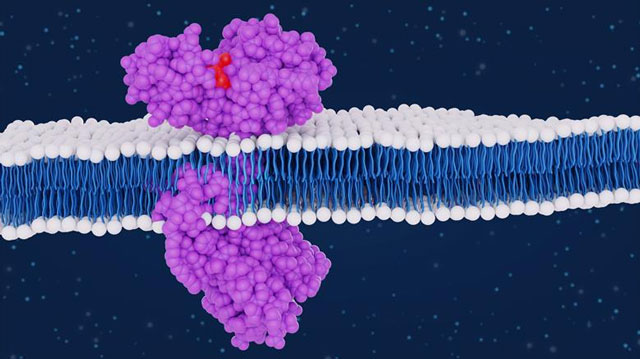
GPCRs are membrane proteins that regulate vital biological functions such as vision, smell, metabolism and hormone signalling. Despite their importance in drug development, their complex and flexible structure has made them difficult to target selectively with conventional medicines.
To overcome this challenge, the researchers used computational and AI-based design tools to create miniproteins of fewer than 100 amino acids. These engineered proteins are able to bind deep pockets within GPCR structures and stabilise either their active or inactive states, effectively switching signalling pathways on or off.
Study lead David Baker said protein design works by reversing the traditional approach—using computing tools to design entirely new proteins tailored to bind specific targets in precise ways. He added that the method can be applied across multiple GPCR types by taking advantage of their dynamic structural behaviour.
Structural analysis confirmed that several of the designed proteins closely matched their predicted models. In early mouse studies, one engineered miniprotein performed comparably to an existing clinical drug while showing reduced side effects.
The team also developed a new screening platform that allows thousands of designed proteins to be tested directly in living human cells, without needing to isolate or modify receptors. This makes testing more accurate and closer to real biological conditions.
Researchers believe the technology could open new possibilities in treating metabolic, inflammatory and neurological disorders by enabling more precise control of GPCR signalling pathways.
The study’s authors said the combination of AI-driven protein design and live-cell screening could significantly advance future drug discovery efforts, offering a roadmap for developing highly selective therapies targeting complex membrane proteins.