Daijiworld Media Network - Kathmandu
Kathmandu, Jun 15: More than 50 orthodox tea factories across Nepal suspended operations on Monday after India's stricter quality-testing regulations severely disrupted exports of one of Nepal's most important agricultural commodities.
Producers of CTC tea have also announced plans to halt operations from Wednesday, citing similar difficulties arising from the new Indian requirements.
According to tea industry associations, more than 90 per cent of Nepal's orthodox tea exports are destined for India, while nearly 60 per cent of the country's CTC tea production is sold in the Indian market.
The crisis follows the implementation of a Standard Operating Procedure (SOP) by the Tea Board of India on May 1, which made quality testing compulsory for every consignment of tea imported from Nepal.
Nepali tea producers say the new system has significantly increased business risks and disrupted supply chains.
Under the revised rules, exporters must wait more than two weeks to receive test reports, consignments cannot be sold until clearance is granted, and any shipment that fails the quality check must either be destroyed or returned to Nepal.
Dilaram Shrestha, president of the Suryodaya Orthodox Tea Producers' Association, confirmed that all 53 factories affiliated with the organisation have ceased operations.
"Starting Monday, we have shut down our factories. The prolonged testing process and the uncertainty surrounding export approvals have made it extremely difficult for businesses to continue operating," he said.
The association stated that large volumes of processed tea intended for India remain unsold due to delays in obtaining test results.
"Although samples are being collected, reports are often delayed for months. This has severely affected tea factories, entrepreneurs and the entire supply chain," the association said in a statement.
The organisation also apologised to tea growers and other stakeholders for disruptions in tea processing and the procurement of green tea leaves.
Industry representatives estimate that nearly 300,000 kilograms of processed tea are currently stranded in warehouses in Kolkata, while more than one million kilograms remain unsold in factories across Nepal.
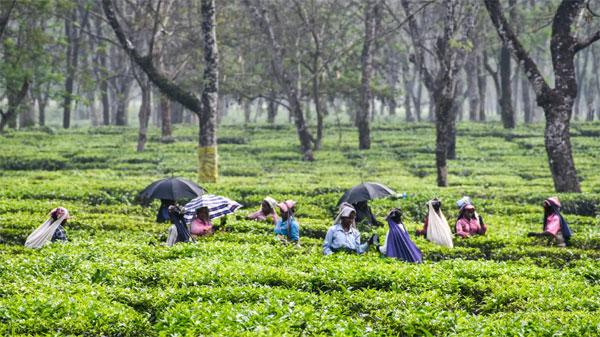
The backlog has disrupted production cycles and created significant financial stress for farmers, workers and factory owners.
"It takes weeks to obtain a test report, and if a sample fails, producers must either transport the tea back to Nepal or destroy it. This creates a huge financial burden for the industry," Shrestha said.
He added that Nepal exports between six and seven million kilograms of orthodox tea to India every season.
Meanwhile, the Nepal Tea Producers' Association, which represents CTC tea manufacturers, has also decided to suspend operations from Wednesday.
Association member Dipesh Dhakal said Indian buyers have become increasingly reluctant to purchase Nepali tea due to the risks associated with the new regulations.
"Once the tea crosses the border, we cannot fully control what happens to it. Because of the uncertainty surrounding sample failures, tea exports have almost come to a standstill," he said.
Previously, Indian authorities only tested selected samples, and once they passed inspection, entire consignments could be exported without additional hurdles.
The stricter measures come amid longstanding concerns raised by Indian tea growers over the growing influx of Nepali tea into the Indian market.
In October 2024, small tea growers in North Bengal intensified demands for restrictions on Nepali tea imports and threatened indefinite protests at key locations along the India-Nepal border.
According to Nepal's Trade and Export Promotion Centre, the country exported 11,393 tonnes of tea worth NPR 3.35 billion during the current 2025-26 fiscal year up to mid-May.
Nepal's fiscal year concludes in mid-July.
Industry stakeholders have warned that unless the export bottleneck is resolved soon, the crisis could have serious economic consequences for thousands of tea farmers and workers who depend on the sector for their livelihoods.