Daijiworld Media Network – Washington
Washington, Jun 16: US President Donald Trump on Monday declared that Iran has agreed never to acquire a nuclear weapon, as Washington and Tehran move ahead with a preliminary agreement aimed at ending more than 100 days of conflict and paving the way for a broader peace settlement.
In a post on Truth Social, Trump wrote, “Iran has agreed to never have a Nuclear Weapon! Also, the story that the US is paying Iran 300 million Dollars is Fake News.”
His remarks came a day after the United States and Iran signed a preliminary memorandum of understanding intended to end hostilities and establish a framework for negotiations on Iran’s nuclear programme and sanctions relief. However, details of the agreement remain limited, and talks on a permanent settlement are still continuing.
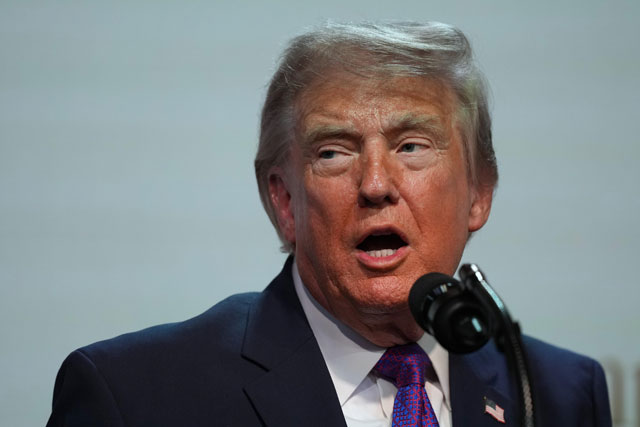
Trump also rejected reports suggesting Washington was offering financial incentives to Tehran as part of the negotiations. While he referred to a figure of USD 300 million, reports surrounding the negotiations have largely focused on discussions involving a much larger amount, estimated at around USD 300 billion.
Vice President JD Vance echoed Trump’s position, stating that preventing Iran from obtaining nuclear weapons had been a central objective of the administration throughout the conflict.
“The President has been clear from day one: Iran will never have a nuclear weapon,” Vance said, describing the emerging agreement as a major diplomatic achievement.
Earlier, Trump announced that a preliminary agreement had been reached between Washington and Tehran and said Vance would participate in a formal signing ceremony expected to take place in Geneva later this week.
Iranian President Masoud Pezeshkian described the memorandum of understanding as an important step towards ending the conflict but cautioned that negotiations on a lasting truce still remained.
The economic aspects of the proposed settlement have generated considerable debate.
According to reports carried by Iranian media, Tehran has sought reconstruction and investment commitments worth at least USD 300 billion as part of the peace process. The package is also said to include the release of approximately USD 24 billion in frozen Iranian assets, suspension of sanctions on Iranian oil and petrochemical exports, and broader access to financial resources held overseas.
Iranian officials have argued that meaningful economic relief is essential for any durable peace agreement, with some estimates placing war-related damage at nearly USD 1 trillion.
Western media reports, however, have described the USD 300 billion figure as a potential international investment and reconstruction initiative that the United States could help facilitate, rather than direct financial compensation from Washington.
While details of the memorandum remain limited, Vance said the document is only about one-and-a-half pages long and serves as a broad framework for future negotiations.
According to US officials, the agreement includes provisions for sanctions relief, the return of inspectors from the International Atomic Energy Agency (IAEA), and cooperation aimed at addressing Iran’s stockpile of highly enriched uranium.
US officials have also indicated that Iran would need to fulfil key American demands before receiving the full benefits of any final agreement, including a permanent commitment not to develop nuclear weapons and an end to support for militant groups such as Hezbollah.
Reports citing sources familiar with the memorandum suggest that both sides have agreed to hold further negotiations on the future of Iran’s uranium enrichment programme, the handling of existing enriched uranium stockpiles and other issues related to the country’s civilian nuclear energy requirements.
The agreement is being viewed as a significant diplomatic development, although substantial negotiations remain before a final and comprehensive settlement can be achieved.