Daijiworld Media Network - New Delhi
New Delhi, Jun 24: The Supreme Court on Wednesday dismissed a petition questioning the applicability of the Economic Weaker Sections (EWS) criteria in admissions to private medical colleges, refusing to accept the argument that the ?8 lakh annual income limit loses significance when institutions charge extremely high tuition fees.
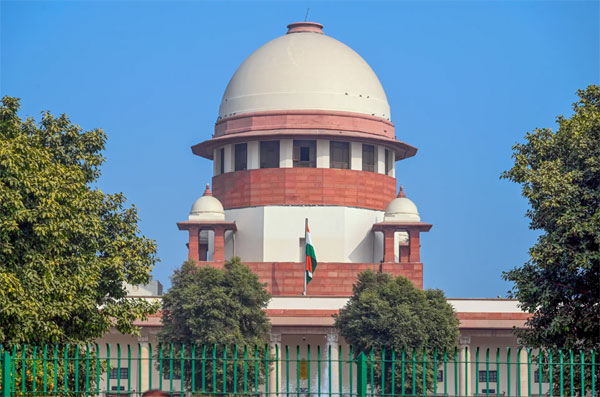
A Bench comprising Justices B.V. Nagarathna and Joymalya Bagchi declined to interfere with a Rajasthan High Court order that had earlier rejected a challenge filed by Rajasthan domicile candidate Harshvardhan Singh.
The petitioner had argued that EWS reservation becomes ineffective in private medical colleges because annual tuition fees ranging from ?18 lakh to ?25 lakh are beyond the reach of economically weaker students.
During the hearing, the Bench observed that self-financed private institutions cannot be compelled to charge fees equivalent to government medical colleges simply because seats have been reserved for EWS candidates.
The court emphasised the fundamental distinction between government-run and private educational institutions, noting that government colleges receive financial support from the state, whereas private colleges function independently on a self-financing basis.
“These are self-financing institutes. Government institutions receive grants from the State. There is a vital difference,” the Bench observed.
The apex court further clarified that while collecting capitation fees is prohibited, private institutions are still entitled to levy regular tuition fees in accordance with the regulatory framework governing their operations.
When the petitioner contended that families earning less than ?8 lakh annually cannot realistically afford such expensive medical education, the court pointed to alternative support mechanisms.
“If you are unable to pay, get a scholarship,” the Bench remarked during the proceedings.
The petition stemmed from a Rajasthan High Court judgment delivered in May 2026.
Harshvardhan Singh, an EWS candidate who appeared for NEET-UG 2025, had argued that charging EWS students the same fees as general category candidates defeats the objective of the 10 per cent reservation introduced under the 103rd Constitutional Amendment Act, 2019. He had sought directions to make private medical education affordable for EWS students.
However, the Rajasthan High Court had ruled that EWS reservation applies only at the admission stage and does not automatically entitle students to concessional fees unless a specific law or policy provides such a benefit.
The High Court Bench of Justices Arun Monga and Sandeep Shah also noted that the fee structure of private medical colleges in Rajasthan had already been determined by the State Fee Regulatory Committee in line with principles laid down by the Supreme Court in the Islamic Academy of Education vs State of Karnataka case.
It further observed that the petitioner had not challenged the original fee fixation order itself.
The High Court also held that there was no statutory provision or binding state policy granting fee concessions to EWS students in Rajasthan. It said that an office memorandum issued by the National Medical Commission (NMC) and cited by the petitioner was only recommendatory in nature and had not been formally adopted by the state government.
Additionally, the court found that all available EWS seats in the concerned medical college had already been filled during earlier counselling rounds, and subsequent admissions were carried out according to the prescribed counselling regulations.