Daijiworld Media Network - Manama
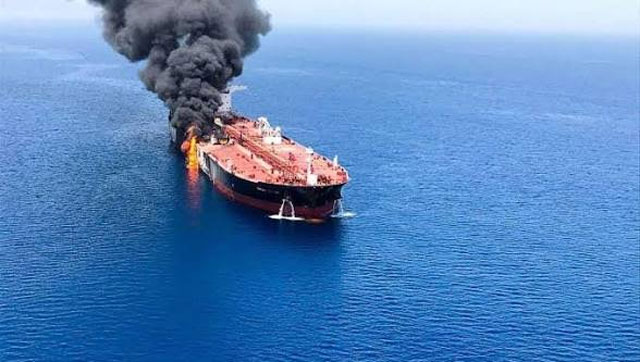
Manama, Aug 9: Bahrain and Saudi Arabia have strongly condemned the reported missile attack on an Abu Dhabi National Oil Company (ADNOC) tanker while it was transiting the Strait of Hormuz, describing it as a blatant violation of international law and a grave threat to maritime navigation and global energy supplies.
Bahrain's Foreign Ministry expressed full solidarity with the United Arab Emirates and support for measures taken by Abu Dhabi to protect its sovereignty, security, stability and vital interests. It said the security and stability of the UAE was an integral part of Bahrain's national security, citing the deep historical ties between the two countries.
The ministry urged the UN Security Council to uphold its responsibilities and take decisive measures to protect navigation in the Strait of Hormuz and other key international waterways.
It also called on the international community to compel Iran to reopen the Strait of Hormuz and stop attacks on commercial shipping in the interest of regional and global security.
The UAE had earlier condemned what it described as an Iranian attack on a vessel linked to its state-owned oil company, accusing Tehran of committing "acts of piracy".
The UAE state news agency WAM initially reported that ADNOC had said one of its vessels was targeted by a missile early Saturday and that the situation was under control. The UAE Foreign Ministry later condemned what it called "the hostile Iranian attack" on an ADNOC vessel.
Neither statement provided details about the tanker, its cargo or any possible damage. No injuries were reported.
Before the conflict, around one-fifth of the world's oil and liquefied natural gas passed through the narrow waterway between Iran and Oman. Shipping has been repeatedly disrupted since the US-Israeli war on Iran began on February 28, pushing up freight rates and raising security concerns.
The UAE ministry said the attack violated a UN Security Council resolution on freedom of navigation and accused Iran's Revolutionary Guards of "acts of piracy" by targeting commercial shipping and using the waterway as a means of economic pressure.
It called on Iran to halt such attacks and fully and unconditionally reopen the strait.
Iran's Revolutionary Guards have previously threatened action against vessels passing through the waterway if they are linked to Tehran's adversaries or fail to comply with Iranian directives.
ADNOC said on Friday that it had been significantly affected by what it described as unprovoked attacks on its personnel and assets, while continuing to meet customer requirements in an "exceptionally challenging environment".
The company said 15 of its vessels had been attacked by missiles and drones while transiting the strait since the start of the conflict, including three this week. One crew member was killed and 20 others injured, it said.
ADNOC did not identify those responsible for the attacks.
Saudi Arabia's Foreign Ministry also strongly condemned the targeting of the UAE tanker, saying such attacks constituted an "attack on maritime navigation security and safety and global energy supply security".
The ministry said the continuation of such attacks by Iran represented "a gross violation of international laws and norms", including UN Security Council Resolution 2817, which provides for freedom of shipping and safe passage through sea lanes.
"The kingdom holds Iran responsible for its continuation of these brutal attacks," the Saudi statement said, demanding an immediate end to the "transgressions" to preserve regional stability and peace.
Saudi Arabia reiterated its solidarity with the UAE and its support for measures taken by Abu Dhabi to maintain its sovereignty and capabilities.
Meanwhile, Iran said it was close to reaching an agreement with Oman on control of the Strait of Hormuz but indicated that such a deal alone would not be sufficient to reopen the waterway.
An agreement between Iran and Oman is seen as important to a broader effort to end the war. A US official, speaking on condition of anonymity, said on Friday that Washington expected an agreement between Iran and Oman soon, allowing normal oil traffic to resume.
Iranian Foreign Minister Abbas Araqchi said Tehran and Muscat were "very close" to an agreement on a new shipping route through the strait, but reopening the waterway depended on other conditions, including US compensation to Iran.
Mohammad Baqer Zolqadr, secretary of Iran's top national security body, has also listed other demands, including an end to US threats against Iran.