Daijiworld Media Network - New Delhi
New Delhi, Aug 20: The Department of Drinking Water and Sanitation (DDWS), Ministry of Jal Shakti, on Thursday organised a national workshop on multi-stakeholder consultation for capacity building under Jal Jeevan Mission (JJM) 2.0.
The workshop, titled “Multi-Stakeholder Consultation on Capacity Building under Jal Jeevan Mission 2.0 for GPs, VWSCs and Sujalam Shakti Groups”, brought together representatives from States and Union Territories, Rural WASH partners, training institutions and other stakeholders.
The consultation focused on reviewing and refining capacity-building modules prepared for grassroots-level stakeholders, particularly Gram Panchayats (GPs), Village Water and Sanitation Committees (VWSCs) and Sujalam Shakti Groups. Participants discussed the content, pedagogy and practical applicability of the modules to ensure they respond effectively to field-level requirements.
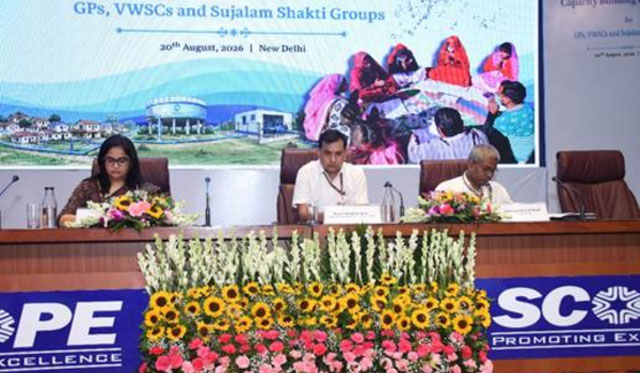
The discussions drew on experiences from different States and Union Territories and sought to incorporate ground realities into the training framework. The objective is to ensure that functionaries and community-level institutions have the knowledge and skills required to effectively manage rural drinking-water services under the next phase of the mission.
Capacity building has been identified as an important component of JJM 2.0, with the focus shifting beyond the creation of water infrastructure towards reliable service delivery, long-term sustainability and stronger community ownership. Earlier Jal Jeevan Mission capacity-building initiatives have also stressed the role of Gram Panchayats and VWSCs in operation and maintenance, water-quality monitoring, grievance redressal and sustaining rural water-supply systems.
The latest consultation is intended to help bring greater consistency to training while allowing the modules to reflect local requirements and experiences. The engagement of States, UTs, training institutions and WASH partners is expected to strengthen the delivery of training at different levels of the rural water-supply system.
The workshop concluded with a shared commitment among stakeholders to further strengthen capacity-building mechanisms and develop a comprehensive and future-ready framework aligned with the objectives of JJM 2.0.
The exercise is part of the government's broader effort to strengthen institutional and community capacity so that rural water-supply infrastructure created under the Jal Jeevan Mission can be operated, maintained and sustained effectively over the long term.