Daijiworld Media Network – New Delhi
New Delhi, Aug 21: Indian seafarers continue to face serious risks amid heightened tensions and attacks involving commercial vessels in and around the Strait of Hormuz, with a recently released video highlighting the dangers faced by crews operating in the conflict-affected region.
The Forward Seamen’s Union of India (FSUI) recently released footage of what it described as a tense confrontation involving a vessel carrying 22 crew members, including 21 Indians, while transiting the Strait of Hormuz on April 22.
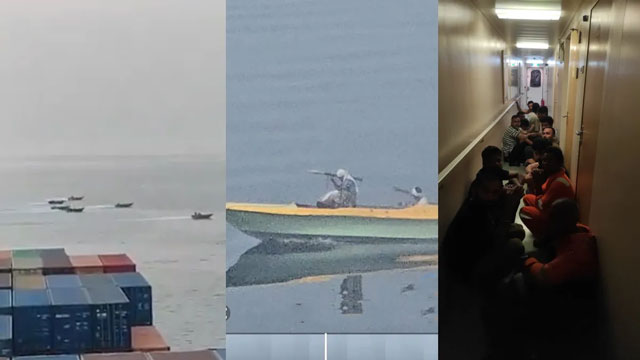
According to the union, the vessel came under pressure from boats operated by Iran’s Islamic Revolutionary Guard Corps (IRGC). The footage reportedly shows several small boats surrounding the vessel and an RPG being fired, while crew members took cover inside the ship. The union said the boats involved were naval forces rather than pirates.
The incident was part of a wider series of maritime confrontations in the strategic waterway during the conflict. On April 22, Iranian forces reportedly fired upon three foreign-flagged commercial vessels and seized two of them. India’s Ministry of Ports, Shipping and Waterways said two of the vessels had 22 Indian seafarers aboard, while at least one Indian seafarer was among the crew of a vessel taken into Iranian custody. The government said the affected Indian seafarers were safe.
The risks have continued amid the wider maritime security crisis. In June, three Indian seafarers aboard an Indian-crewed commercial vessel were killed in a US strike, according to reports. The FSUI later sought assistance for the families of Indian mariners who died during the conflict.
The Indian government has since strengthened measures to monitor and protect seafarers in the region. The Directorate General of Maritime Administration has advised shipowners, ship managers and recruitment agencies to avoid deploying Indian seafarers on voyages through the Strait of Hormuz amid renewed security concerns.
The government has also established enhanced monitoring and reporting mechanisms for vessels and seafarers operating in the affected waters. The ‘Seafarer-First’ framework includes real-time tracking, crisis management and emergency reporting measures.
The Strait of Hormuz remains a critical maritime route, and disruption in the waterway has affected commercial shipping and left large numbers of seafarers stranded in the Gulf. Reports earlier this year highlighted the difficulties faced by crews unable to leave conflict-affected waters.
The repeated incidents have renewed calls from seafarers’ organisations for stronger protection for civilian crews operating in conflict zones. FSUI has argued that navigational advisories and voluntary safety measures alone may not be sufficient to protect seafarers exposed to military confrontations.
India’s maritime authorities continue to monitor the situation and coordinate with relevant agencies to safeguard Indian seafarers and commercial shipping operating in the region.