Daijiworld Media Network - Damascus
Damascus, Aug 24: Syrian Foreign Minister Asaad al-Shaibani met Israeli intelligence officials in Jordan on Sunday in US-mediated talks aimed at reducing tensions between the two countries following an Israeli strike on a Syrian airbase near the Turkish border, Syrian state media reported.
Syria's Sana news agency, citing a diplomatic source, said the meeting involved a “high-level Israeli delegation” and was mediated by the United States. AFP reported that al-Shaibani met Roman Gofman, head of Israel's Mossad intelligence agency.
According to Sana, the talks focused on establishing practical mechanisms to stop Israeli attacks, arrests and targeting operations and on reviving negotiations for a lasting security agreement between Syria and Israel.
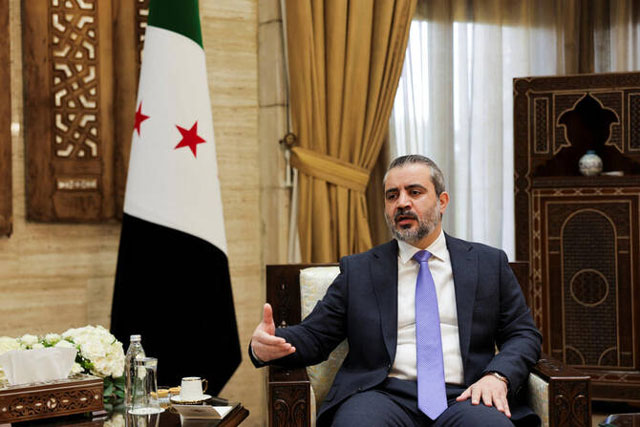
The two sides also discussed efforts to ease tensions between Israel and Turkiye and prevent their rivalry from spilling over into Syrian territory.
The United States has been seeking to broker a security agreement between Israel and the government of Syrian President Ahmed al-Sharaa for more than a year.
Israel has carried out hundreds of strikes in Syria since the fall of longtime president Bashar al-Assad in December 2024. Israeli forces have also entered a United Nations-patrolled buffer zone that had separated Israeli and Syrian forces near the Israeli-occupied Golan Heights.
Israel on Thursday bombed the Abu Duhur airbase in northwestern Idlib, saying the strike was intended to prevent Turkish troops from deploying at the facility. Syria and Turkiye have denied the Israeli claim.
The incident has further heightened tensions between Israeli Prime Minister Benjamin Netanyahu and Turkish President Recep Tayyip Erdogan, who have exchanged sharp remarks over developments in Syria.
During Sunday's talks, the Syrian delegation stressed that Syria is a sovereign state with the right to rebuild and develop its national army and determine its alliances and partnerships according to its national interests.
Damascus rejected any arrangements or mechanisms that would restrict those sovereign rights, Sana reported.
Syria's immediate priorities include an Israeli withdrawal to positions held before Assad's overthrow and the full restoration of the 1974 disengagement agreement between Israel and Syria.
The Syrian side also reaffirmed its claim to sovereignty over the Israeli-occupied Golan Heights.
Israeli media described the talks as positive, while reporting that Israeli officials entered the negotiations with several conditions.
These reportedly include preventing Turkish military activity in Syria, keeping the Syrian side of the Golan Heights demilitarised, ensuring the security of Syria's Druze community and preventing the Syrian military from obtaining certain strategic weapons systems.
Israel has also reportedly linked any withdrawal from Syrian territory it currently occupies to achieving diplomatic gains in the negotiations.
Previous rounds of US-mediated talks had resulted in an agreement in principle on a joint mechanism for intelligence sharing and defusing tensions. However, the negotiations stalled in February after the United States and Israel launched their war on Iran, with no date initially set for their resumption.
Ahead of Sunday's meeting, al-Shaibani told Reuters that Damascus did not trust Israel but that the door remained open for diplomacy. He said Syria had completely suspended contacts with Israel following last week's attack on the Abu Duhur airbase.
Al-Shaibani said the two sides had reached agreement on paper on “almost everything” around the beginning of the year, including proposed security zones in southern Syria and a buffer zone where only United Nations forces would be present.
However, analysts remain cautious about the prospects for a breakthrough.
Hassan Mneimneh, a political analyst and researcher at the Middle East Institute, told Al Jazeera that the latest talks were unlikely to immediately de-escalate tensions, citing Israel's previous actions.
He said Syria was concerned that the country could become a battlefield in the growing rivalry between Israel and Turkiye.
Mneimneh said Damascus was also worried about Israel's expanding territorial presence in Syria, extending towards Mount Hermon and southern Syrian provinces.
From Syria's perspective, he said, the talks are aimed not only at reducing tensions with Israel but also at preventing a potential Israeli-Turkish confrontation from undermining Syria's efforts to rebuild and consolidate its political authority following the fall of Assad.