Daijiworld Media Network – Kathmandu
Kathmandu, Aug 30: The death toll from the devastating flash floods that struck Nepal has risen to 734, while 2,498 people, including 589 foreign nationals, remain missing, according to the latest figures released by the National Disaster Risk Reduction and Management Authority (NDRRMA) on Sunday.
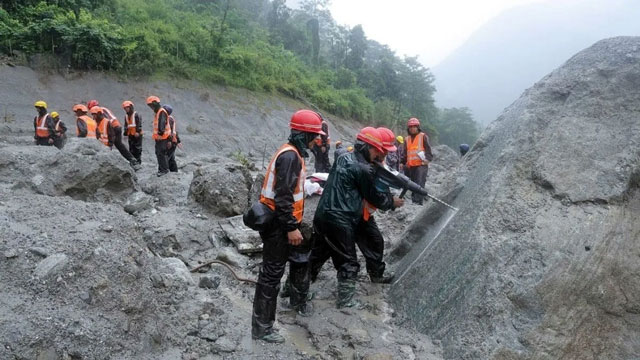
The toll is expected to rise further as rescue teams continue searching through areas devastated by floods, mud and debris following Wednesday’s disaster. Bodies have been recovered from several affected districts, with the highest number reported from Chitwan, Nawalparasi East and Nawalparasi West.
The disaster has also left hundreds of people injured. Security forces have so far rescued more than 8,000 people, while search operations continue for thousands who remain unaccounted for. Among those missing are hydropower project workers, local residents, foreign nationals and people travelling with foreign tourists.
With authorities facing difficulties in storing and identifying the large number of recovered bodies, the Nepal government has decided to bury unidentified and unclaimed remains in airtight bags while preserving DNA samples and other evidence for possible identification at a later stage.
Prime Minister Balendra Shah said only bodies that cannot be identified would be handled by the government after DNA and other evidence capable of establishing their identity had been preserved. He reiterated that the government's first priority was to save every possible life.
The situation remains dangerous in several flood-hit areas, with authorities warning of renewed flooding. The NDRRMA said water levels in the Bhotekoshi River in Rasuwa had risen further and urged security personnel, rescue teams and residents in riverside and affected areas to exercise extreme caution.
The warning covers Rasuwa, Nuwakot, Dhading and Chitwan, where rescue and relief operations are continuing amid difficult weather and ground conditions.
More than 19,000 security personnel have been mobilised for rescue and relief operations, according to the latest NDRRMA update. The Nepal Army, Nepal Police and Armed Police Force have been involved in evacuations, searches and delivery of relief supplies. Helicopters are also being used to reach areas cut off by damaged roads and bridges.
The catastrophe has been linked to a glacier-related event near the Nepal-China border that sent huge volumes of water, mud and debris downstream, devastating settlements, roads, bridges and hydropower infrastructure. The disaster has affected a large area of central Nepal and parts of Tibet.
Nepal had initially indicated that it did not require foreign rescue teams. However, amid the scale of the disaster and appeals from countries whose citizens remain missing or stranded, Kathmandu has opened the door to specialised international assistance.
India, China, Australia and South Korea are among the countries providing assistance or technical support. India has stepped up its relief operations, sending rescue specialists, medical assistance and other emergency supplies to Nepal.
India has also deployed specialised teams to assist with search and rescue operations, including technical personnel and forensic experts who can help Nepalese authorities identify recovered remains through DNA analysis. India has additionally sent equipment for temporary bridges and other infrastructure needed to restore access to affected areas.
India's Ministry of External Affairs said more than 100 Indian nationals had been rescued in Nepal, while hundreds of Indians and persons of Indian origin remained missing or uncontactable. Hundreds of Indian nationals who had been stranded on the Chinese side have also been safely moved towards Nepal, while others remain safe and in contact with authorities.
The disaster has also prompted India to closely monitor the situation along its northern border. The National Disaster Response Force has deployed teams in Uttar Pradesh and Bihar as authorities monitor the possibility of increased water flow into the Gandak river system.
Nepal's authorities are continuing to search for missing people while simultaneously dealing with the difficult task of identifying and preserving recovered remains. With water levels rising again in parts of the disaster zone, officials have warned that rescue operations could face further challenges in the coming days.
The scale of the catastrophe has made it one of the most serious disasters to hit the Himalayan region in recent years, with Nepal and neighbouring Tibet both reporting deaths and thousands of missing people.