Daijiworld Media Network - Tehran
Tehran, Sep 8: Iran will continue its resistance with strength until the "aggressors" are brought to complete regret, President Masoud Pezeshkian said on Tuesday, while reiterating Tehran's opposition to war.
In a post on X, Pezeshkian said the Islamic Republic had consistently opposed war and believed that protecting people's interests and ensuring security in West Asia required avoiding warmongering.
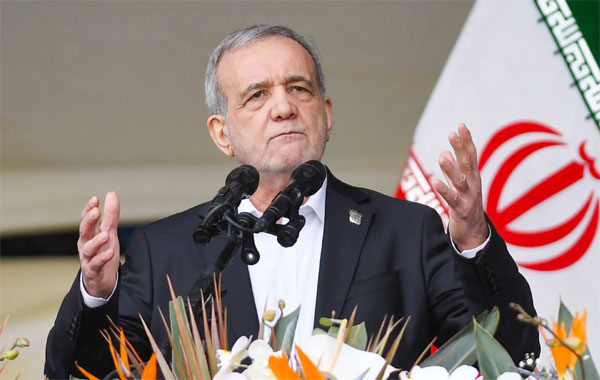
"The Islamic Republic of Iran has always been opposed to war and considered the preservation of the people's interests and ensuring the (West Asia) region's security to lie in refraining from warmongering," he said, according to Xinhua news agency.
"However, just as it has courageously risen to defend against aggression up to this day, Iran will continue this resistance with strength until the aggressors are brought to complete regret, and will remain the guardian of the rights of the great Iranian people," he added.
Meanwhile, Iraqi Foreign Minister Fuad Hussein met Arab League Secretary-General Nabil Fahmy in Cairo on Monday to discuss regional security tensions and disruptions to navigation in the Strait of Hormuz, according to the Iraqi Foreign Ministry.
The two sides discussed potential economic repercussions for Arab countries, particularly Iraq, arising from disruptions to shipping through the strategic waterway. They stressed the Strait of Hormuz's importance to global trade and energy supplies.
Hussein called for communication channels to be opened to help de-escalate tensions between Tehran and Washington and said the Arab League could play a positive role.
Fahmy stressed the importance of quiet diplomacy and dialogue in addressing regional crises and expressed readiness to support efforts aimed at reducing tensions.
The meeting took place on the sidelines of the regular ministerial session of the Arab League Council.
According to the report, Israel and the United States launched joint attacks on Tehran and other Iranian cities on February 28. Iran responded with waves of missile and drone attacks targeting Israel and US bases and assets in the region, while tightening its control over the Strait of Hormuz.
Tehran subsequently restricted shipping through the strait, while US forces imposed a naval blockade targeting vessels travelling to or from Iranian ports.
On June 18, the United States and Iran signed a Memorandum of Understanding (MoU) aimed at ending the war in the region. Under the agreement, negotiations were scheduled to be held within 60 days, with the deadline falling on August 17, to reach a final agreement.
However, the fate of the talks remains unclear amid renewed escalation between the two countries.