Daijiworld Media Network - Jersey City
Jersey City (US), Sep 14: A community garden that has served residents for nearly two decades could soon be preserved as a public green space after the Jersey City City Council voted 7-0 on first reading to advance a $1.2 million purchase of a property on Glenwood Avenue.
The 128 Glenwood Avenue lot had been used by neighbours as an informal community garden for about 20 years, with residents growing tomatoes, peppers and other produce while creating a shared space to meet, work and learn.
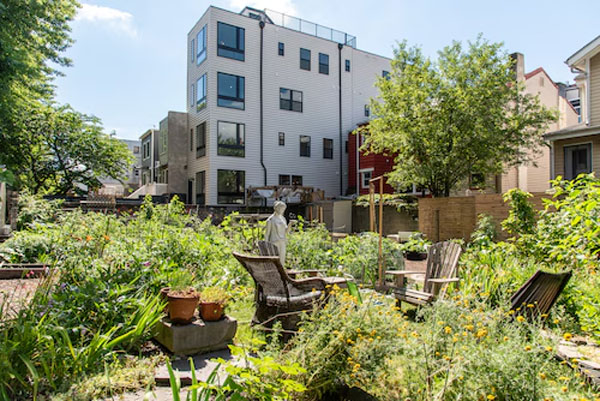
The garden's future came under threat after the property owner obtained permits for development. A developer reportedly purchased the lot in 2022 for $425,000 and planned a small apartment building featuring three- and four-bedroom units.
The prospect of losing the garden prompted the McGinley Square Community Board and other local advocates to campaign for the city to acquire the property. The effort included collecting signatures, contacting elected representatives and urging residents to support preservation of the site.
Council vote advances purchase
Following months of advocacy, the City Council approved an ordinance on first reading to purchase the property for $1.2 million and convert it into a pocket park with a community garden.
Ward E Councilwoman Eleana Little and Councilwoman at-Large Mamta Singh were absent during the vote.
The first-reading approval does not complete the transaction. The purchase ordinance still requires a second and final reading. A related resolution concerning the use of Community Development Block Grant Public Facilities funding was withdrawn and is expected to return at a later meeting.
The garden's future therefore remains dependent on final approval, funding arrangements and an agreement governing its long-term operation.
Proposed funding
The proposed funding plan includes around $1 million from Community Development Block Grant funds and $230,000 from the city's liquid fund.
The proposal has also prompted debate over the use of public money. Supporters view the acquisition as an investment in open space, food production and community wellbeing, while critics question whether $1.2 million should be spent on a garden amid other financial pressures and housing needs.
The property also has development potential, adding another dimension to the debate. Preserving the site would mean foregoing an opportunity to build additional housing in a city where demand remains high.
From private lot to public space
If the purchase is completed, the property would move from private ownership into city control.
The administration has discussed placing the site in Jersey City's Adopt-A-Lot programme and seeking proposals from a nonprofit organisation to operate it. The McGinley Square Community Board, which has led the campaign to save the garden, is expected to be a potential operator.
Under the proposed arrangement, the city would retain ownership while leasing the property to a nonprofit for a nominal fee. The operator would be responsible for maintenance, programming and fundraising.
The garden would also be required to remain open to the public for at least 20 hours a week from May through November.
More than a garden
Residents say the value of the Glenwood Avenue site extends well beyond the vegetables grown there.
Over the years, the garden has functioned as a community meeting place where neighbours share tools, exchange gardening advice and work together. Children can learn about food production, while older residents can pass on gardening knowledge and families can gain access to fresh produce.
In a densely developed neighbourhood with limited open land, even a small garden can provide residents with outdoor space and a sense of connection.
The site also represents continuity. For roughly 20 years, residents invested their time and labour in the property despite not owning it. The possibility of development therefore threatened not only planting beds but also a space around which local relationships had developed.
Environmental and educational benefits
A community garden can provide a range of benefits beyond food production. Vegetation can help reduce heat, absorb rainwater and provide habitat for insects and birds.
The site can also serve as an informal outdoor classroom. Growing vegetables can teach children about biology, food production and patience, while composting can introduce lessons about decomposition and waste reduction.
For residents living without private yards, the garden can provide opportunities for outdoor activity, social interaction and recreation.
Public access remains key
If the property becomes a city-owned pocket park, questions about access and management will remain important.
Some community gardens operate through individual plots, while others are collectively maintained. Others combine gardening with public events, educational programmes and produce-sharing initiatives.
The proposed Adopt-A-Lot arrangement is expected to require public access for at least 20 hours each week during the main growing season. Balancing the needs of gardeners with those of residents who do not have individual plots will be essential.
Seating areas, educational programmes, produce sharing and seasonal events could help the site function as both a community garden and a public park.
Clear rules governing access, maintenance, safety and financial reporting would also be important for its long-term success.
Housing versus open space
The Glenwood Avenue proposal highlights a broader challenge facing urban communities: balancing the need for housing with the need for open space and neighbourhood amenities.
Supporters of development can point to the need for additional homes, including larger units for families. Garden advocates argue that small green spaces provide social, environmental and health benefits that cannot easily be replaced once construction begins.
For residents who have tended the Glenwood garden for years, the space has become part of the neighbourhood's identity.
The council's 7-0 vote does not resolve that wider debate, but it indicates that the participating council members believe preserving this particular property is worth pursuing.
What happens next
The council must now consider the purchase ordinance on second and final reading. Further action is also expected on the funding resolution.
If the acquisition is approved, the city will need to complete the purchase and establish the long-term operating arrangement. The property could require soil assessments, infrastructure improvements, new garden beds or fencing before it is fully established as a public park.
A sustainable budget, committed volunteers and a clear programme of public activities will also be necessary.
For now, the council's first vote has given the Glenwood Avenue garden a chance to survive.
The tomatoes and peppers that have grown on the private lot for years could continue to flourish under public ownership, tended by many of the same neighbours who helped transform an otherwise empty parcel into a community gathering place.