Daijiworld Media Network - Dhaka
Dhaka, Sep 29: Six people died of dengue in Bangladesh in the 24 hours till 8 am local time on Tuesday, taking the death toll from the mosquito-borne disease in 2026 to 239, local media reported.
During the same period, 1,942 new dengue patients were admitted to hospitals across the country, according to the Directorate General of Health Services (DGHS).
Of the total dengue deaths, 52.9 per cent were women and 47.1 per cent were men, United News of Bangladesh (UNB) reported.
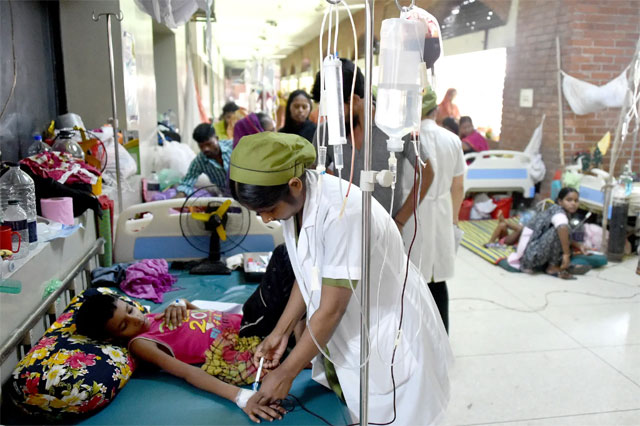
Since January 1, as many as 77,672 dengue patients have been hospitalised in Bangladesh, of whom 72,008 have recovered from the disease.
Amid the worsening dengue outbreak, Prime Minister Tarique Rehman on September 6 directed authorities to step up cleanliness drives and public awareness campaigns to prevent the spread of the disease, UNB reported.
Dengue is a viral infection caused by the dengue virus (DENV) and is transmitted to humans through the bite of infected mosquitoes. There is no specific treatment for dengue, while early detection and access to appropriate medical care can reduce fatality rates in severe cases.
Bangladesh has witnessed a sharp rise in dengue cases and deaths in recent years compared with the 18-year period from 2000 to 2018, local media reported.
Between 2000 and 2018, Bangladesh recorded 296 dengue deaths and 50,208 cases. In the subsequent seven years and nine months, fatalities rose to 3,466 and reported cases to 7,86,091, according to The Daily Star.
The number of dengue deaths during the latter period was about 11.71 times the earlier figure, while reported cases were around 15.66 times higher.
Public health expert Mushtuq Husain said a long-term, coordinated and people-centred public health programme was needed for sustainable dengue control.
Husain said Aedes mosquitoes had adapted to different environments and could breed even in small quantities of stagnant water. Their spread was also no longer confined to urban areas, The Daily Star reported.
He said population growth and repeated infections were further complicating the situation.
Husain also pointed out that people who had previously contracted dengue could become infected again, while communities with little or no previous exposure were also reporting dengue infections.