Media Release
Mangaluru, Oct 7: St Aloysius Pre-University College (SAPUC), organised a staff enrichment programme focusing on Ignatian discernment, holistic well-being and emotional management. Fr Frederick D’Silva SJ and Subhash Bangera, corporate trainer and facilitator, offered practical approaches to self-awareness, thoughtful decision-making and constructive interpersonal relationships in personal and professional life.
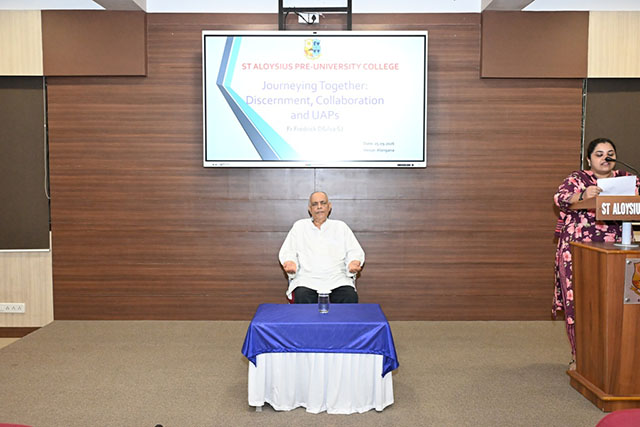
In the first session, Fr D’Silva’s presented a seminar on ‘Discernment, collaboration, networking and the Universal Apostolic Preferences (UAPs)’ as important dimensions of Ignatian spirituality and Jesuit education. He spoke in detail on discernment and its relevance to educators. Explaining the interplay of thoughts, emotions, desires and impulses, Fr D’Silva emphasised the importance of examining one’s inner responses before acting. Through examples he illustrated how a teacher’s initial interpretation of behaviour could lead to an inappropriate response. He reminded participants that apparent inattentiveness might arise from circumstances unknown to the teacher, calling for sensitivity and understanding.
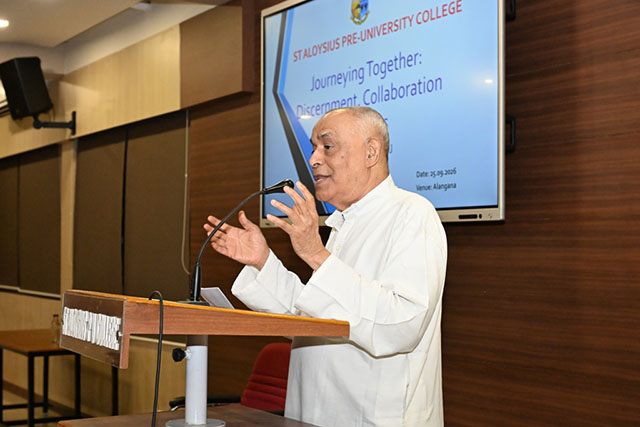
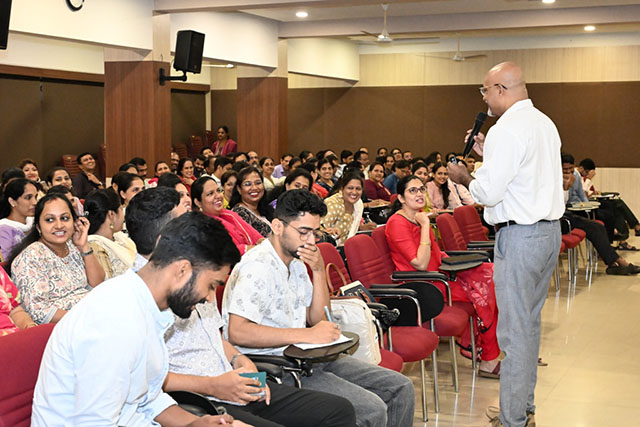
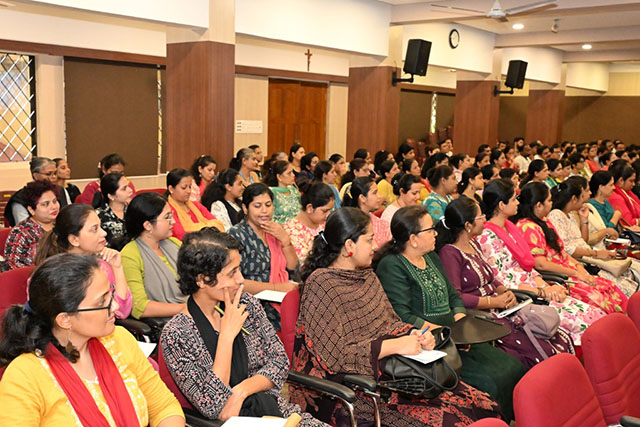
Fr Fredrick presented discernment through the four A’s—Awareness, Acceptance, Analysis and Application. Awareness involves recognising one’s thoughts, feelings and impulses, while acceptance requires acknowledging them without denial or suppression. Analysis invites reflection through four questions: ‘What am I feeling or thinking?’, ‘Where is this coming from?’, ‘What is it doing to me?’ and ‘Where is it leading me?’ Application involves directing these inner experiences towards constructive action. Even difficult emotions such as anger, fear, guilt and anxiety, he explained, could be handled in ways that support growth and healthier relationships.
Fr D’Silva also introduced the ‘Examen of consciousness’ as a daily practice of reflection. He suggested setting aside five to fifteen minutes to review the day’s events, emotions and responses, recognise constructive patterns and learn from difficult moments. Linking this practice to the well-being of the body, mind, heart and spirit, he encouraged an integrated approach to personal growth.
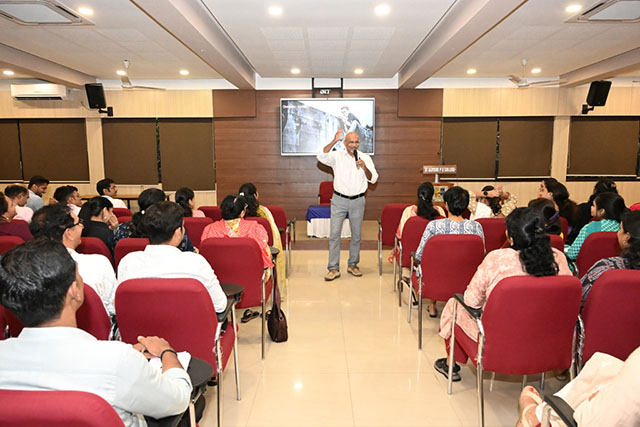
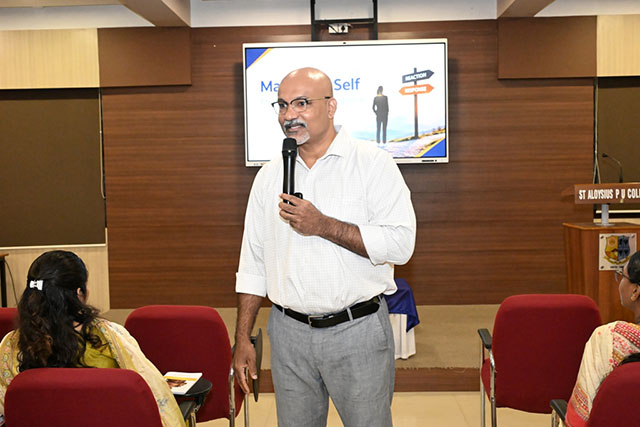
During the second session, Subhash Bangera explored emotional management, behavioural patterns, communication and continuous development. Through role plays, film clips and group activities, he encouraged participants to examine their habitual responses and identify areas for improvement.
The PER technique—Pause, Evaluate and Respond. He explained that pausing in an emotionally charged situation allows individuals to examine their self-talk, consider possible consequences and choose a thoughtful response.
Participants were encouraged to recognise physical signs of emotional changes, including alterations in facial expressions, body language and speech, sweating and palpitations. He illustrated how discomfort can escalate into anxiety and reflected on the role of one’s attitude and the connection between an external event and one’s response to it.
Mock interviews helped participants explore passive, submissive, aggressive and assertive behavioural patterns. Bangera encouraged assertive communication grounded in mutual respect and understanding, highlighting the importance of preserving relationships during disagreements. A self-awareness activity invited participants to write positive observations about colleagues and acquaintances, helping them recognise strengths that others saw in them.
To distinguishing ‘human worth’ from ‘skill worth’, he used the example of a crumpled currency note retaining its value to emphasise that every person deserves dignity, irrespective of position or professional performance. Participants were also encouraged to identify personal barriers such as procrastination, emotional sensitivity and fear of public speaking. Referring to neuroplasticity, he explained how repeatedly choosing constructive responses could gradually establish new patterns of thought and behaviour.
Together, the sessions reinforced the value of reflection in everyday life. The Four A’s, the Examen of consciousness and the PER technique offered complementary practices for understanding inner experiences and responding with greater awareness. The programme encouraged staff to apply these insights in their interactions with students and colleagues, supporting personal well-being and a compassionate, respectful educational environment.