Daijiworld Media Network - Washington
Washington, Nov 26: US President Donald Trump is moving to replace one of his judicial nominees in Texas after outgoing Republican Senator John Cornyn blocked the original candidate from advancing, complicating the White House's efforts to secure judicial confirmations before Democrats take control of the Senate in January.
Senate Judiciary Committee Chairman Chuck Grassley said late on Wednesday that his panel had received partial nomination paperwork for Steve Fahey, a former prosecutor backed by Cornyn for a judgeship based in Dallas. Trump had earlier nominated US Justice Department official T Elliot Gaiser for the same position on the US District Court for the Northern District of Texas.
Cornyn last week withheld a so-called blue slip supporting Gaiser's nomination, effectively preventing it from moving forward under the Senate's customary procedure for federal judicial appointments.
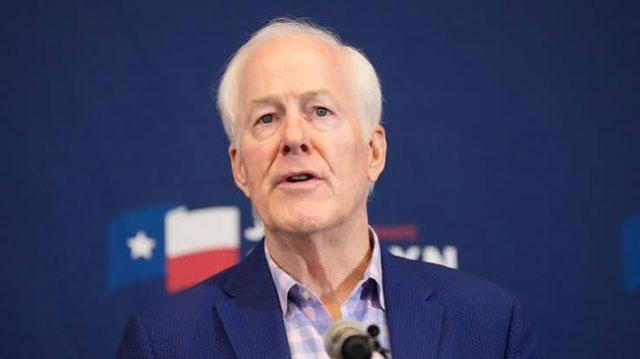
The Texas senator, who recently lost a Republican primary to a Trump-backed challenger, objected to Gaiser's selection, arguing that the nominee was not from Texas and had not undergone adequate scrutiny before being considered for a lifetime judicial appointment.
"The White House was trying to jam him down our throat without adequate vetting for a lifetime job," Cornyn said.
The dispute marks another instance of a Republican senator opposing a Trump judicial nominee from their home state, adding to the challenges facing the administration as it seeks to confirm as many candidates as possible before the change in Senate control on January 3.
Democrats secured a 56-seat majority in the recent election and are set to take control of the Senate in January, leaving the White House with limited time to advance its remaining judicial nominations.
Trump's administration has already been forced to replace another judicial nominee who faced opposition from Republican senators representing the candidate's home state.
Grassley's office said the Iowa Republican would consult colleagues to assess whether Fahey and another recently announced nominee, North Carolina prosecutor Jim O'Neill, have a viable path to confirmation.
The White House did not respond to a request for comment.
Across his two presidential terms, Trump has secured the appointment of 295 judges to lifetime positions, including three justices who form part of the US Supreme Court's 6-3 conservative majority.
Under Senate tradition, home-state senators have considerable influence over the selection of federal judicial nominees in their states. They can effectively block district court nominees by withholding a blue slip, a document signalling their support for the candidate.
Trump had nominated Gaiser to the Northern District of Texas seat following the election with the backing of Texas Republican Senator Ted Cruz.
Gaiser, a former solicitor general of Ohio, previously served as a law clerk to conservative US Supreme Court Justice Samuel Alito. He currently heads the Justice Department's Office of Legal Counsel, an influential department unit that frequently reviews the legality of actions taken by the Trump administration.
The replacement of Gaiser with Fahey highlights the influence of home-state senators in the judicial nomination process and the political challenges facing the White House as it attempts to fill federal court vacancies before the Senate changes hands.