Daijiworld Media Network – Panaji
Panaji, Dec 7: A simmering turf war over fishing rights along the western coastline has escalated, with authorities in Goa and Maharashtra seizing boats registered in neighbouring States for alleged incursions into their territorial waters. The flare-up has once again drawn attention to India’s complex marine governance system and the rising friction among coastal fishing communities.
Fishing along India’s maritime belt is governed by a dual legal regime: State-level Marine Fishing Regulation Acts (MFRAs) that apply up to 12 nautical miles from the coast, and central maritime laws that come into force beyond that, in the Exclusive Economic Zone (EEZ).
Goa, Maharashtra and Karnataka each enforce their own MFRA, regulating vessel registration, licensing, gear use and the monsoon fishing ban.
Goa’s Marine Fishing Regulation Act, 1980—amended in 2019—mandates licensing for all vessels, restricts mechanised boats within 5 km of the coast to protect traditional fishermen, enforces a monsoon ban from June 1 to July 31, and prohibits destructive gear such as purse seines and LED lights.
Maharashtra and Karnataka follow similar frameworks and share the same monsoon ban period, but differ in restricted zones: Goa and Maharashtra maintain a 5 km buffer for mechanised vessels, while Karnataka extends this limit to 10 km. These inconsistencies have led to repeated cross-border incursions.
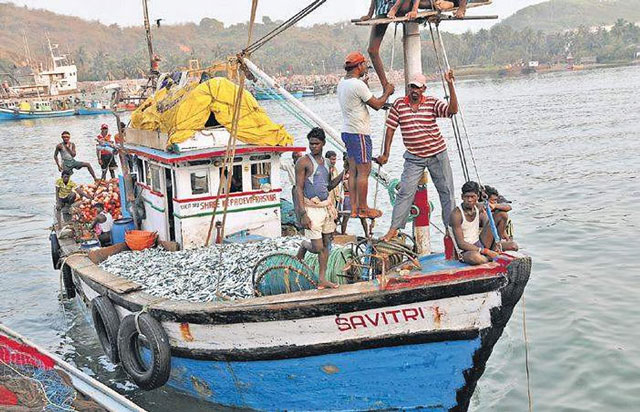
In recent weeks, Goa’s fisheries department detained several boats registered in Maharashtra and Karnataka for allegedly operating within its territorial limits. Maharashtra authorities, in what appeared to be a retaliatory response, seized two Goa-registered boats.
What complicates the matter further is the absence of any explicit legal provision—either permitting or prohibiting—mechanised vessels from fishing in another State’s territorial waters, leaving a grey zone ripe for conflict.
With livelihoods under threat and tempers rising, experts say the three coastal States must urgently revisit cooperative mechanisms to prevent future confrontations and ensure sustainable, equitable fishing practices along the western coast.