Daijiworld Media Network - Mumbai
Mumbai, Dec 26: As nominations open for the upcoming Brihanmumbai Municipal Corporation (BMC) elections, the Koli community, regarded as Mumbai’s original inhabitants, has stepped up its demand for greater political representation in the civic body.
Despite holding a decisive electoral influence in at least 24 wards across the city, only two Koli corporators were elected in the 2017 BMC polls, community leaders pointed out, calling it a reflection of long-standing political neglect.
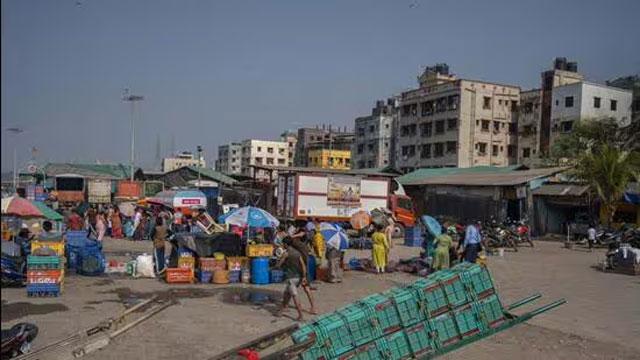
In several koliwadas, particularly Versova village, banners recently urged voters to support “sons of the soil,” declaring that Koli candidates would be backed irrespective of party affiliation. Though these banners were removed by the BMC on December 15 following enforcement of the model code of conduct, the campaign has continued on social media platforms and WhatsApp groups.
Community leaders said the mobilisation reflects deep-rooted concerns over mega infrastructure projects, including the coastal road, which they claim are reshaping Mumbai’s coastline while threatening traditional livelihoods.
According to the 2016 Marine Fisheries Census, over 32,500 Mumbai residents from 1,827 families are directly engaged in fishing and allied activities. Devendra Tandel, president of the Akhil Maharashtra Machimaar Kriti Samiti, said nearly 30,000 Koli women are registered fish vendors across 108 city markets.
“We are spread across 95 koliwadas, but our voices are diluted as we fall under different wards,” Tandel said, adding that the Rs 25 crore allocation for koliwada development in the 2025–26 BMC budget was grossly inadequate.
Though Mumbai’s first mayor Balasaheb Worlikar and former mayor Milind Vaidya hailed from the Koli community, leaders said the community currently lacks a strong electoral presence.
Echoing similar concerns, Rajhans Tapke of the National Association of Fishermen noted that no Koli representative currently sits in the Assembly or Parliament. “Despite electoral strength, Kolis are rarely given tickets,” said Tapke, who hopes to contest the civic polls on a Congress ticket.
The two Koli corporators in the previous BMC — Pushpa Koli from Sion Koliwada and Yogita Koli from Malad — were criticised for focusing largely on local issues rather than wider community concerns, including coastal infrastructure projects.
Residents say intrusive development is squeezing traditional fishing settlements. Rajshree Bhange, a Versova koliwada resident and leader of the Marol fish sellers’ community, said fish markets were increasingly being overtaken by large commercial establishments, while resorts and luxury bungalows encroached upon village land.
“This election is a battle for survival,” said Nandkumar Pawar, president of the Maharashtra Small Scale Traditional Fish Workers Union, citing projects such as the coastal road and Vadhvan Port.
He warned that policy decisions like relaxation of coastal regulations, construction on salt pan land, and mangrove destruction could irreversibly damage the community’s future.
Heritage and maritime historian Anita Yewale, associated with INTACH Mumbai, stressed that Kolis and their cultural heritage must be protected. “Prime sea-facing land should not become an excuse to displace indigenous communities,” she said.
To safeguard their interests, Pawar said gaothan committees have been formed in koliwadas across Mumbai to resist redevelopment and slum housing projects that threaten their traditional way of life.