Daijiworld Media Network – New Delhi
New Delhi, Jan 20: The Supreme Court on Tuesday said it will examine whether the Enforcement Directorate (ED), the central probe agency, is entitled to file writ petitions as a juristic person before state High Courts under Article 226 of the Constitution for enforcement of its rights.
A two-judge bench headed by Justice Dipankar Datta and Justice Satish Chandra Sharma issued notice to the ED while hearing appeals filed by the governments of Kerala and Tamil Nadu. The appeals challenge a September 26, 2025 order of a division bench of the Kerala High Court, which upheld the ED’s locus to file writ petitions under Article 226.
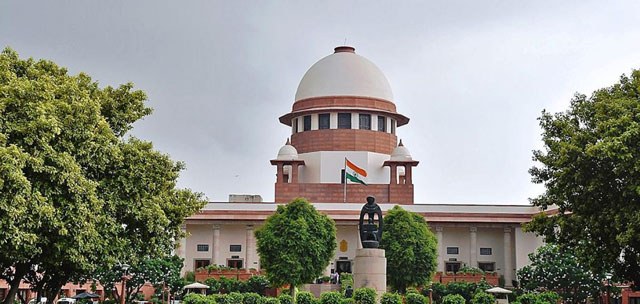
“We issue notice to the ED on the appeals filed by the governments of Kerala and Tamil Nadu. We will examine the issue,” the bench observed.
The Kerala High Court had upheld a Single Judge’s interim order staying the functioning of a state-appointed inquiry commission constituted to probe allegations that the ED and other central agencies were falsely implicating political leaders in the state, including Chief Minister Pinarayi Vijayan, in the gold smuggling case.
The ED had initially approached the Single Judge challenging the state government notification that set up the inquiry commission headed by former High Court judge Justice V. K. Mohanan. The commission was tasked with examining allegations of jurisdictional overreach and political bias by central agencies, particularly the ED, in linking the Chief Minister and other state officials to the gold smuggling case.
While granting interim relief, the Single Judge stayed the commission’s functioning and held that the ED, being a statutory body, is entitled to invoke the writ jurisdiction of the High Court under Article 226. This order was subsequently upheld by the division bench, leading the Kerala government to approach the Supreme Court.
In its appeal, the state contended that the ED is merely a department of the Central Government and does not have the status of a juristic person to independently file writ petitions under Article 226, a question that the apex court has now agreed to examine.