Daijiworld Media Network - Tehran
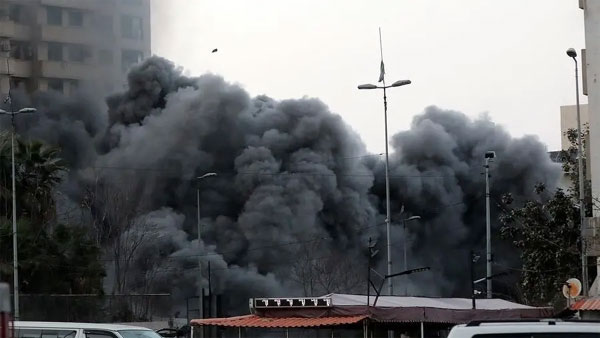
Tehran, Apr 14: In Tehran, the Islamic Revolutionary Guard Corps (IRGC) has issued a stern warning, stating that it is prepared to deploy advanced and previously undisclosed military capabilities if hostilities with the United States and Israel persist.
IRGC spokesperson Hossein Mohebbi indicated that Iran has so far exercised restraint but could unveil powerful new measures should the conflict continue. Reinforcing this stance, Defence Ministry spokesperson Reza Talaeinik asserted that Iran’s military strength is steadily expanding, with ample reserves of missiles, drones, and other weaponry to sustain both offensive and defensive operations.
Meanwhile, diplomatic tensions have also intensified. Foreign Ministry spokesperson Esmaeil Baghaei criticized the United States’ reported attempt to impose restrictions around the strategically crucial Strait of Hormuz, describing it as an act that could harm the global economy.
Efforts to de-escalate the situation have so far fallen short. Delegations from Iran and the United States recently held extended talks in Islamabad, but negotiations failed to yield an agreement. These discussions followed a brief ceasefire involving Iran, the United States, and Israel after weeks of intense conflict.
On the military front, the situation has escalated further. The United States announced the initiation of a blockade targeting Iranian ports and coastal regions, allowing only limited maritime transit through the Strait of Hormuz. Donald Trump issued a strong warning, stating that any Iranian vessel approaching the blockade would be met with immediate force.
Trump also claimed that a significant portion of Iran’s naval fleet had been destroyed, while warning that remaining vessels—particularly fast attack boats—would be targeted if they pose a threat near the blockade zone.
?? Wider Implications
The Strait of Hormuz remains one of the world’s most critical oil transit routes. Any disruption could:
• Impact global energy supplies
• Increase oil prices
• Heighten geopolitical instability
The evolving situation signals a fragile and potentially dangerous phase in Middle Eastern geopolitics, with both military readiness and diplomatic efforts unfolding simultaneously.