Daijiworld Media Network - Cairo
Cairo, May 10: Egypt and Qatar have jointly appealed to the United States and Iran to act with restraint and political maturity as tensions continue to rise in the Gulf region.
During a telephone conversation held on Saturday, Egyptian Foreign Minister Badr Abdelatty and Qatari Prime Minister and Foreign Minister Sheikh Mohammed bin Abdulrahman Al-Thani stressed the urgent need to prioritise diplomacy and dialogue over military confrontation.
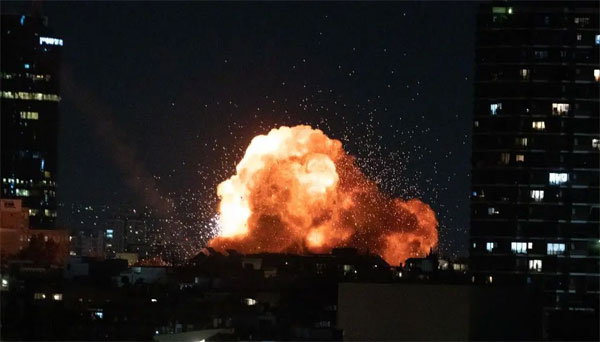
According to a statement released by Egypt’s Foreign Ministry, both leaders emphasised that the current situation demands “wisdom” and “responsibility” from all sides. They called for continued support to the ongoing negotiations between Washington and Tehran, saying diplomatic engagement remains the only effective path to resolving disputes and maintaining regional peace.
The two diplomats also reviewed recent developments in the US-Iran negotiation process and underlined that long-term security and stability in the Middle East can only be ensured through political solutions that safeguard the interests and resources of regional populations.
Regional tensions have remained high since February 28, when Israel and the United States reportedly carried out joint strikes against Iran. Although a ceasefire was reached on April 8, subsequent peace discussions held in Pakistan failed to produce a lasting agreement between the parties involved.
In recent days, hostilities have intensified again around the strategically crucial Strait of Hormuz. Reports indicate that clashes involved US military strikes targeting Iranian vessels and coastal installations, while Iran responded with missile and drone attacks aimed at American naval forces operating in the area.
Iran’s Islamic Revolutionary Guard Corps Navy claimed on Friday that it had launched a large-scale coordinated assault using ballistic missiles, anti-ship cruise missiles, and explosive drones against US destroyers in the Gulf region.
Iranian officials alleged that the operation caused significant damage to American naval assets and forced three US destroyers to withdraw from the Strait of Hormuz zone.
However, the United States Central Command (CENTCOM) rejected those claims, stating that American forces successfully intercepted what it described as “unprovoked Iranian attacks” and carried out defensive strikes while US naval ships were transiting through the strategic waterway.
CENTCOM maintained that the United States does not seek further escalation but remains fully prepared to defend its military personnel and maritime operations in the region.
US President Donald Trump also stated earlier this week that the American destroyers involved in the incident had not suffered any damage during the confrontation.