Daijiworld Media Network – New Delhi
New Delhi, Jun 10: India may have operationally deployed a small number of nuclear warheads for the first time, according to the Stockholm International Peace Research Institute's (SIPRI) Yearbook 2026, signalling a possible shift in the country's nuclear readiness amid evolving regional security challenges.
The assessment comes as SIPRI warns that the world is entering a "new nuclear arms race", driven by rising geopolitical tensions, military modernisation and the weakening of arms-control frameworks.
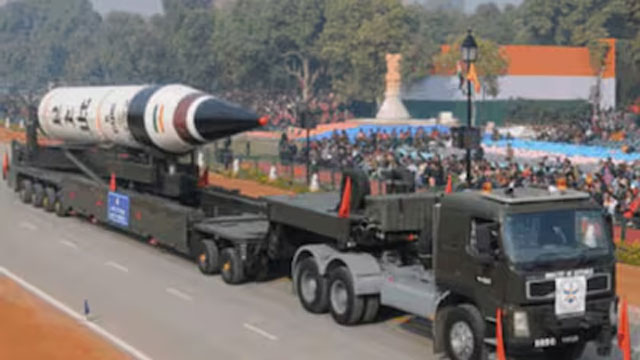
According to the report, India possessed an estimated 190 nuclear warheads as of January 2026, up from 180 a year earlier. More notably, SIPRI suggested that around 12 of these warheads may now be deployed with operational forces.
If confirmed, the development would mark a departure from India's long-standing practice of storing nuclear warheads separately from delivery systems during peacetime.
While SIPRI did not indicate any change in India's official nuclear doctrine, the report suggests a higher state of operational readiness within the country's strategic forces.
India's nuclear strategy has traditionally been based on the principles of "No First Use" and "credible minimum deterrence", under which nuclear weapons are maintained primarily to deter adversaries rather than for battlefield deployment.
For decades, analysts have believed that India kept its nuclear warheads de-mated from missiles and aircraft, allowing greater political oversight and decision-making time in the event of a crisis.
The reported deployment of a limited number of warheads is being viewed as a possible move towards a more responsive deterrence posture, particularly as India continues to strengthen its sea-based nuclear capabilities.
According to SIPRI, India's nuclear modernisation efforts are increasingly influenced by China's rapidly expanding military and nuclear capabilities.
The report noted that China is enlarging its nuclear arsenal at a faster pace than any other country, prompting strategic concerns across the Indo-Pacific region.
India's newer missile systems are believed to have the capability to strike targets deep inside Chinese territory, reflecting a broader strategic focus beyond the traditional India-Pakistan security dynamic.
At the same time, tensions with Pakistan continue to shape India's deterrence calculations. Both countries have continued to develop new missile systems and delivery platforms in recent years.
SIPRI estimated that the world's nine nuclear-armed states collectively possess around 12,187 nuclear warheads, with nearly all engaged in extensive modernisation programmes.
The institute warned that nuclear weapons are playing an increasingly prominent role in national security strategies as arms-control agreements weaken and geopolitical rivalries intensify.
Against this backdrop, India's reported deployment of nuclear warheads, though limited in scale, is being viewed by analysts as part of a broader global trend towards enhanced nuclear readiness and deterrence in an increasingly uncertain security environment.