Daijiworld Media Network – New Delhi
New Delhi, Jun 13: In a landmark judgment that could redefine the legal and economic recognition of unpaid household work in India, the Supreme Court has declared homemakers as "nation builders" and ruled that the loss of domestic care provided by them must be treated as a separate and independent category while determining compensation in motor accident cases.
In a significant step towards standardising compensation awards, the apex court fixed a minimum notional monthly income of Rs 30,000 for assessing the loss of domestic care services rendered by homemakers.
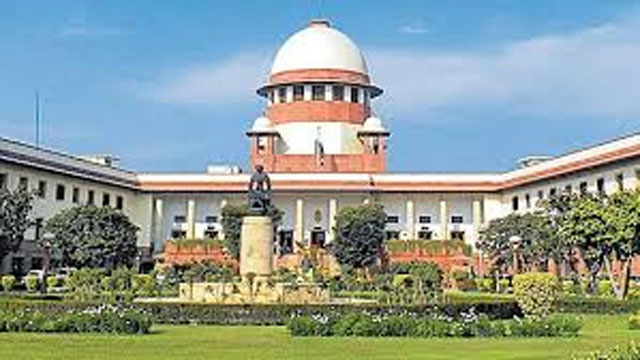
The judgment was delivered by a bench of Justices Sanjay Karol and N. Kotiswar Singh while hearing an appeal arising from a motor accident compensation case involving a homemaker who died in a road accident on November 25, 2001.
Expressing concern over the prolonged delay in the matter, the court noted that the case took 25 years to reach finality, including 22 years during which it remained pending before the Punjab and Haryana High Court. The Supreme Court enhanced the compensation payable to the deceased woman's family from Rs 8.4 lac to Rs 63 lac, along with 7.5% interest from 2001.
The bench further directed that if the compensation amount is not paid within three months, the interest rate would rise to 9%, and after six months it would increase to 12% per annum.
The court observed that the contribution of homemakers extends far beyond routine household chores and carries substantial economic and social value that has historically remained invisible in conventional legal and financial assessments.
The bench held that when a family loses a homemaker through death or incapacity, the loss is not merely emotional but also financial, as the domestic care and support provided by her play a crucial role in the functioning and stability of the household.
“Housewives contribute to the household. They are nation builders. They build the nation. How do you assess that contribution and monetise it? The word ‘homemaker’ would now acquire the acronym of ‘nation builder’,” the court observed.
Justice Karol further said: “We are also of the view that the housewife contributes to the growth of the human being and the nation. The homemaker builds nation. So we have laid down the principles, and as a nation builder, we have quantified the amount that the loss of domestic care monthly income minimum in any event would be Rs 30,000 per month.”
To ensure greater consistency in compensation calculations, the Supreme Court introduced "loss of domestic care" as a distinct head of compensation.
The bench clarified that this category would operate alongside the heads of damages already recognised in the Supreme Court's landmark Pranay Sethi judgment and would not replace existing compensation principles.
Explaining the concept, the court said the loss encompasses a homemaker's ability to manage household responsibilities, the impact on children who lose their mother's care and guidance, and the loss suffered by a husband deprived of a life partner who helped ensure the smooth functioning of the household.
The Supreme Court strongly criticised the conventional practice of assigning nominal incomes, sometimes as low as Rs 3,000 per month, to homemakers while determining compensation.
“It is ironic to describe a homemaker as dependent on earning members when, in reality, the household's functioning depends substantially on the homemaker. The earning members are, in fact, solely dependent on the homemaker, but alas, this reality does not receive the acknowledgment,” the bench observed.
Questioning the long-standing perception that unpaid domestic work lacks economic value, the court noted that women perform essential functions such as cooking, cleaning, caregiving and managing households, thereby supporting members of the paid workforce whose efforts sustain economic productivity and growth.
Writing the judgment, Justice Karol said: “It is high time that the invisible is made visible or the veil is pierced to make what can be partially seen come out in the open. ‘Homemakers’, to put it directly, actually are the ‘nation builders’, and they ought to be recognised as such.”
Highlighting the broader significance of unpaid domestic labour, the Supreme Court observed that women's unpaid caregiving work is estimated to contribute between 15 and 17% of India's GDP, despite remaining largely unpaid and unrecognised.
“To put the enormity of what is missed out by these conventional methods, it may be noted that every day, around 16 billion individual hours are devoted to unpaid domestic work and care,” the court said.
The judgment also referred to an earlier observation made by the apex court in 2024, when it held that the notion that homemakers do not work is fundamentally misplaced and ruled that their deemed income should not be lower than the minimum wage paid to a daily wage worker.
The bench also took note of delays in the disposal of motor accident compensation matters. It reviewed 123 such cases dealt with by a bench led by Justice Karol and found that they had remained pending in various High Courts for an average of eight years.
The court requested the Chief Justices concerned to accord priority to long-pending accident compensation claims and ensure their expeditious disposal.
Concluding the judgment, the Supreme Court expressed hope that the contribution of homemakers would receive wider recognition not only in courts but also in society at large.
“We only hope and trust that the word Home Maker will now acquire the acronym of nation builder,” Justice Karol said.