Daijiworld Media Network - Jammu
Jammu, Aug 4: Joint security forces on Tuesday launched a massive cordon and search operation (CASO) in Jammu and Kashmir's Poonch district following intelligence inputs about the suspected movement of two separate groups of terrorists.
Officials said the operation was initiated after security agencies received information about suspicious movement at two locations in the remote Surankote area.
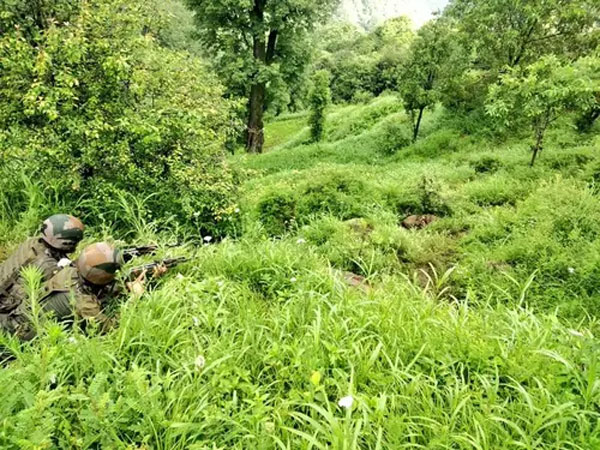
Personnel of the Special Operations Group (SOG) of the Jammu and Kashmir Police, assisted by troops of the Rashtriya Rifles, launched the operation in the Dhara Sangla, Gujjar Naar and Kherowali Dhok areas, along with adjoining forested villages.
The operation in the densely forested region was continuing till the filing of this report. Officials said there had been no contact or exchange of fire with the suspected terrorists so far.
"A systematic operation is underway to track the terrorists," officials said.
Meanwhile, in a separate development, an old unexploded mortar shell was recovered from the courtyard of a house near the International Border (IB) in the Hiranagar sector of Kathua district on Tuesday morning.
The rusted shell was discovered by labourers carrying out excavation work at the residence of Subash Chander in Kattal-Brahmana village. The workers immediately alerted the authorities after noticing the suspicious object.
A police team, accompanied by the Bomb Disposal Squad (BDS), reached the spot, secured the area and safely removed the unexploded shell for disposal.
Officials said unexploded mortar shells, commonly classified as unexploded ordnance (UXO), are frequently found in border areas of the Union Territory due to decades of military confrontations and ceasefire violations along the Line of Control (LoC) and the International Border.
During periods of heavy cross-border shelling, a number of mortar rounds fail to explode because of mechanical defects, fuse failures or soft-impact landings. In hilly, forested and muddy terrain such as Poonch, Rajouri and Kupwara, shells often become embedded in soft soil or dense vegetation without detonating.
Many of these live shells remain buried for years and are later exposed due to excavation work, erosion or other environmental changes, posing a continuing safety risk to residents in border villages.