By Lavanya S
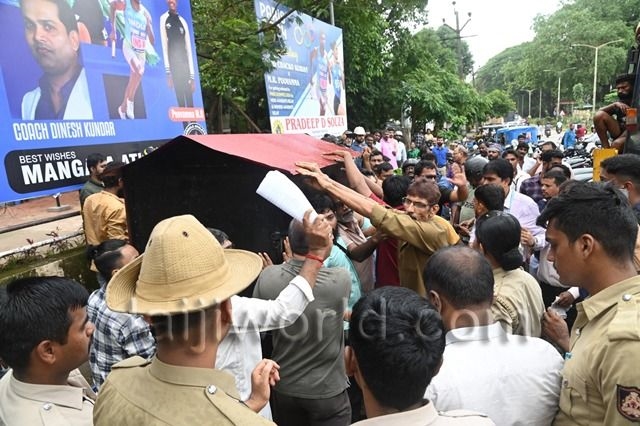
In Mangaluru city, particularly around the State Bank and Town Hall areas, evicting street vendors and destroying their daily livelihoods has become a recurring pattern. Local authorities routinely remove these traders under the pretext that they obstruct urban aesthetics, cause traffic bottlenecks, and sell inferior goods. These actions have repeatedly triggered intense confrontations, street protests, and police complaints.
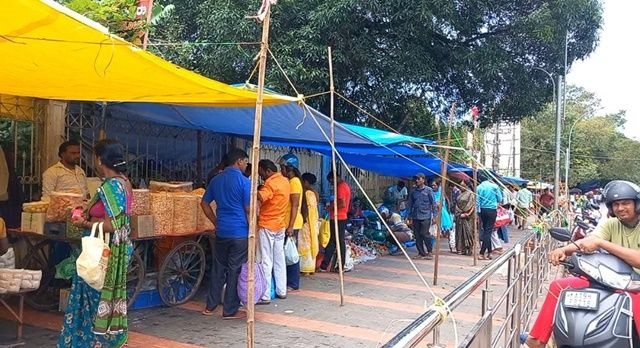
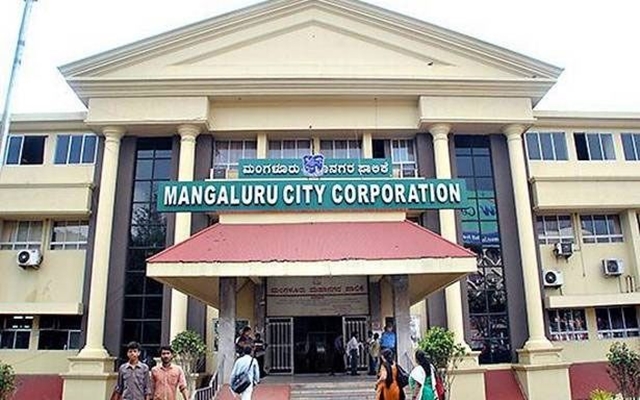
A critical debate has recently centered around the city's Sunday bazaar. When corporation officials forcibly shut down this temporary weekly market, serious questions arose regarding who would safeguard the rights of low-income workers. Labour unions intervened, prompting vendors to restart their stalls in protest. The standoff eased only when minister U T Khader intervened, reminding the administration that cities belong to the poor as much as to the privileged.

A historical and global tradition
Street vending is not an unexpected consequence of modern urbanization; it is one of humanity’s oldest economic systems. Roadside trading of food, textiles, and crafts has defined public life across Asia, Europe, Africa, and Latin America for centuries. In global hubs like Bangkok and Istanbul, street markets are celebrated as vital tourist attractions. Rather than banning vendors, many international cities integrate them into regulated zones. Street vending provides immediate employment for millions and offers an essential, low-cost marketplace for lower-income populations.
The Indian context and constitutional protections
In India, street vending traces back through centuries of weekly village markets and seasonal fairs. As urban centers expanded, vendors selling fruits, vegetables, flowers, tea, and household items became indispensable to daily neighborhood life. Most vendors are rural migrants seeking self-employment with minimal capital. Lacking formal social safety nets, their stalls represent their primary means of survival.
Recognizing this vulnerability, Parliament enacted the Street Vendors (Protection of Livelihood and Regulation of Street Vending) Act, 2014. The law mandates that local urban bodies survey existing vendors and issue official certificates of vending. It also requires the creation of town vending committees comprising police, city planners, municipal officials, and vendor representatives to collaboratively designate vending zones and operational rules, strictly prohibiting arbitrary removals without designated alternative sites.
Furthermore, the Supreme Court of India has upheld street vending rights across landmark rulings. In Sodan Singh vs New Delhi Municipal Committee (1989), the court confirmed that street trading is a constitutional right to occupation under Article 19(1)(g). Similarly, in Olga Tellis vs Bombay Municipal Corporation (1985), the court established that the right to livelihood is an integral part of the right to life under Article 21.
The economic function of the Sunday bazaar
Mangaluru’s Sunday bazaar serves a vital socio-economic function. Its primary clientele consists of migrant labourers, daily-wage workers, students, and lower-middle-class families seeking affordable daily necessities. Migrant workers find access to affordable cooked food and essentials, daily wage labourers enjoy purchasing options that match their modest cash flows, and students find budget-friendly supplies. Rather than causing urban decay, vendors form an essential informal distribution network that sustains the working-class economy.
Balancing urban development and civic duty
Urban administration requires clean roads, heritage preservation, and orderly traffic flow. However, urban renewal should not mean displaced livelihoods. When commercial malls and high-rises bypass municipal guidelines, law enforcement is rarely as swift as it is against roadside vendors.
To address congestion without creating economic hardship, municipal authorities should implement structural solutions such as identifying designated vending zones, enforcing waste management protocols, regulating traffic flow, and engaging in active dialogues through town vending committees. Simultaneously, vendors share civic responsibilities, including keeping clear pathways for foot traffic, maintaining cleanliness, and observing strict food hygiene standards to protect public health.
A city's true character is measured not merely by its skyline, but by how it accommodates its most vulnerable residents. Behind every modest street setup is a family relying on daily earnings for education, healthcare, and basic dignity. True urban progress is inclusive, as public spaces belong equally to those commuting in private vehicles and those earning a living along the curb. Preserving Mangaluru’s street vendors balances civic regulation with fundamental human empathy, ensuring that city beautification does not come at the expense of its working class.