Daijiworld Media Network - New Delhi
New Delhi, Aug 11: Tulu Nadu’s young generation should take a greater interest in competitive examinations and aspire to occupy senior positions in the government, said Walter Nandalike, founder and managing director of Daijiworld Media.
Speaking at an Aati celebration organised by Delhi Tulusiri at the Delhi Kannada Education Society in Lodhi Estate, New Delhi, Nandalike said that although Tulu Nadu was known as a land of intellectuals, the representation of Tuluvas in prestigious services such as the IAS and IPS remained disproportionate to their capabilities.
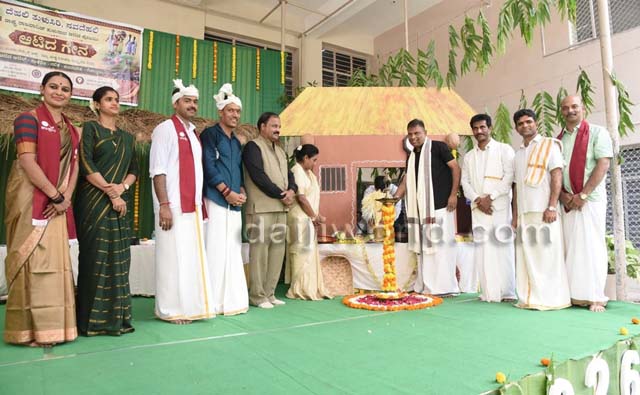
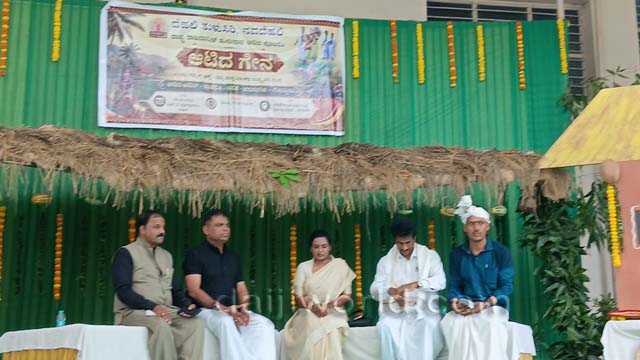
“In today’s competitive environment, the youth of Tulu Nadu should appear for competitive examinations and develop an interest in securing higher positions in the government,” he said.
Nandalike was speaking after inaugurating the Aati celebration programme organised by Delhi Tulusiri.
He said several eminent personalities from Tulu Nadu had made significant contributions to the banking, education, hotel and medical sectors, bringing recognition to the region.
“For those of us living in cities today, the lives of our elders are an example. There is vitality and wisdom in every practice followed by our elders,” he said.
He noted that many Tuluvas who had moved out of the region and settled in different parts of the country and abroad had continued to remain rooted in the culture and traditions of their native land.
“Tuluvas have come together on the basis of language, rising above caste and religion,” he said, highlighting the unifying power of the Tulu language and culture.
Aati’s traditional wisdom
The Aati period, traditionally observed during the monsoon month of Aati in Tulu Nadu, occupies a special place in the cultural life of the region. The significance of Aati and its traditional practices were highlighted by chief guest H Rajesh Prasad, IAS, chief secretary of the Chandigarh Union Territory Administration.
Rajesh Prasad said Aati should not be seen merely as a month of hardship, but as an important period in the traditional life of Tulu Nadu.
“For our elders, Aati was not a month of hardship; it was part of their life,” he said, pointing out that people in those days protected their health by consuming food prepared from naturally available and medicinally beneficial ingredients.
He said the traditional food practices followed during Aati had evolved over generations to suit the climatic conditions of the season and continued to remain relevant even today.
Dr Akshata A Rao, IDAS, joint controller in the defence accounts department of the Government of India, said the programme showcased the richness, diversity and nutritional value of Tulu Nadu’s traditional culture and cuisine.
She commended Delhi Tulusiri for its efforts to carry the cultural traditions of Tulu Nadu to the national capital. “Delhi Tulusiri’s work in spreading the cultural fragrance of Tulu Nadu in the national capital is exemplary,” she said.
She also stressed the need to preserve and promote the region’s traditional food habits and cultural practices among younger generations.
Delhi Tulusiri president Vasanth Shetty Bellare, who presided over the programme, said the event was organised with the aim of introducing the younger generation to the identity, traditions and way of life of their elders.
He said Delhi Tulusiri had been organising the Aati programme continuously for the past three years and that it had now become an important annual event for the Tulu community in Delhi.
“Delhi Tulusiri has been consistently working to spread the fragrance of our native land in Delhi and preserve our cultural identity,” he said.
He also urged the Karnataka government to recognise Tulu as an official language. He said that following such recognition, efforts would be made, in association with senior coastal officials and public representatives in Delhi, to renew the campaign for including Tulu in the Eighth Schedule of the Constitution.
38 traditional dishes on the Aati menu
A major attraction of the celebration was a traditional food festival featuring 38 varieties of dishes specially prepared during the Aati season in Tulu Nadu.
The spread included Pathrode, Halasina Gatti, Kanile Hesaru Kaalu Gasi, Kottige, Arasina Gatti, Thimare Chutney, Neeru Mavinakayi Chutney and Menthya Ganji, among several other traditional delicacies.
Members of Delhi Tulusiri and NCR Tuluvas prepared the dishes in their homes and served the traditional feast to around 250 people.
The venue was decorated in traditional style with green festoons, adding to the festive atmosphere.
An exhibition of traditional implements and artefacts associated with the old way of life in Tulu Nadu was another attraction. Guests were welcomed with betel leaves and areca nuts, in keeping with the region’s traditional customs.
The cultural programme featured a Tulu folk dance by Vaishnavi, while Mohan Das, Melvin G Lobo and their troupe presented traditional Tulu folk songs. Traditional coastal folk sports were also organised in three categories for children, women and men, drawing enthusiastic participation.
Tuluvas from Delhi, Noida and Gurugram, along with a large number of guests and community members, attended the programme.
The event was part of Delhi Tulusiri’s continuing efforts to preserve and showcase the traditions, cuisine, folk arts and community life of Tulu Nadu outside Karnataka.
Delhi Tulusiri secretary Aravind B Jain welcomed the gathering, while joint secretary Krishnaraj delivered the vote of thanks. Treasurer Nagaraj M introduced the chief guests.
Joint secretary Prakash Shetty Ulepady and member Shrimathi Ashwita Mithesh Shetty were involved in organising the programme. Harshitha Kushalappa and Ravi Moodabidre coordinated the proceedings.