Daijiworld Media Network - Kabul
Kabul, Aug 12: Around 2.4 million girls in Afghanistan have been unable to access secondary education since 2021, the United Nations Educational, Scientific and Cultural Organisation (UNESCO) said, calling the continued exclusion of girls and women from education a grave violation of their fundamental human right to learn.
UNESCO condemned discrimination against women and girls and called for the immediate and unconditional restoration of their right to education.
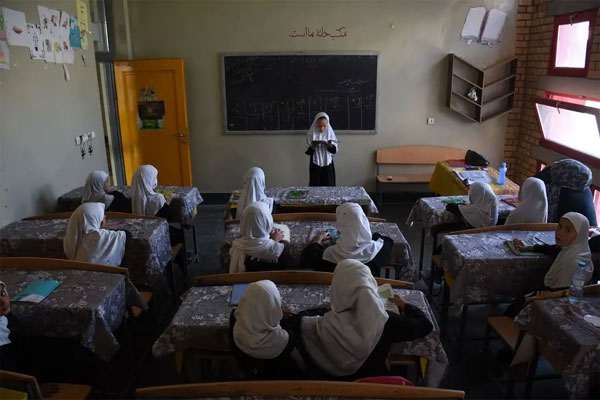
“For five years now, Afghanistan is the only country in the world to formally prohibit access to education for girls and women beyond the primary level. As of 2026, an estimated 2.4 million girls remain excluded from secondary education. UNESCO condemns discrimination against women and girls and calls for the immediate and unconditional restoration of their right to education,” the UN agency said in a post on X.
UNESCO said restrictions imposed in Afghanistan have reversed progress made in expanding access to education over the past two decades. While access to schooling for girls was severely limited in 2001, nearly one million girls were enrolled in secondary education by 2021, it noted.
“The continued exclusion of girls and women from education constitutes a grave violation of their fundamental human right to learn and risks condemning Afghanistan to decades of lost potential, deepening poverty, and irreversible harm,” UNESCO said.
The agency noted that nearly half of Afghans live below the poverty line and warned that denying girls and women access to education while restricting their employment further undermines their ability to support their families and contribute to Afghanistan's economic future.
UNESCO also highlighted the impact of the restrictions on the wellbeing and mental and physical health of women and girls, warning that exclusion from education increases the risks of early marriage.
The UN agency said the Taliban's decision to prevent female teachers from teaching boys has further aggravated teacher shortages and undermined the quality of education for students more broadly.
UNESCO said it remains committed to supporting Afghan girls and women through alternative pathways to learning, including community-based education, literacy and skills development programmes, as well as psychosocial support.
It acknowledged that such initiatives cannot replace access to formal schooling but said they provide vital opportunities for learning to continue while restrictions remain in place.
Since returning to power in Afghanistan in 2021, the Taliban has imposed sweeping restrictions on women and girls, including barring girls from secondary schools beyond the sixth class, prohibiting women from attending universities and restricting employment and access to public spaces.