Daijiworld Media Network – Margao
Margao, Aug 13: NGO Goemcho Ekvott and villagers of Velsao have rejected claims made by South Western Railway (SWR) regarding a disputed parcel of land in the village, questioning the railway authorities’ assertion that the land has been in their legal possession for over a century.
Goemcho Ekvott president Orville Dourado said the claim was unfounded, pointing out that Goa remained under Portuguese rule until 1961. He sought clarification from SWR Chief PRO Dr Manjunath Kamamadi on why the disputed land has not been mutated in the name of SWR, while several other parcels in Goa, including land in neighbouring Cansaulim and Sancoale, have reportedly been mutated and partitioned in the railway’s name.
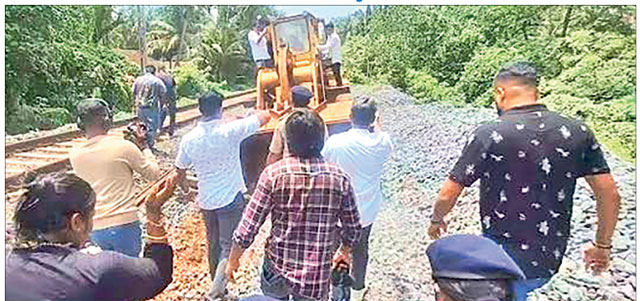
Dourado also questioned why SWR had not submitted replies to objections raised by villagers before the ISLR (ROW) for several months. He said the authority has now granted SWR a final opportunity to submit its response by August 27.
Responding to SWR’s statement on alleged encroachments, Dourado said the disputed land had been openly and continuously used by villagers as a motorable public road since before the existing railway track was laid in 1890.
He claimed that SWR had itself acknowledged that villagers were in “casual, permissive occupation” of the land. Since the land does not have a Survey Number, Dourado argued that SWR had not established any legal basis to claim ownership over it.
Dourado further alleged that SWR had failed to provide details regarding the withdrawal of certain administrative instructions issued on June 19, 2026. He said there appeared to be confusion between administrative instructions concerning the Right of Way and title proceedings pending before the ISLR (ROW).
He also alleged that SWR had violated instructions requiring authorities to ensure that residents’ access was not completely blocked without providing a suitable alternative arrangement.
The villagers and Goemcho Ekvott have urged the railway authorities to clarify the legal status and ownership of the disputed land and ensure that access to residents is not affected.