Media Release
Mangaluru, Aug 18: A baby born at just 24 weeks of gestation (five-and-a-half months of pregnancy), at the very threshold of viability, has successfully overcome a series of life-threatening challenges following prolonged and highly specialised treatment at the neonatal intensive care unit (NICU) of Indiana Hospital in Mangaluru. Now around four months old, the baby has been discharged in a stable condition without oxygen support, is feeding well, gaining weight satisfactorily, and has normal eye, hearing and neurological assessments for the corrected age.
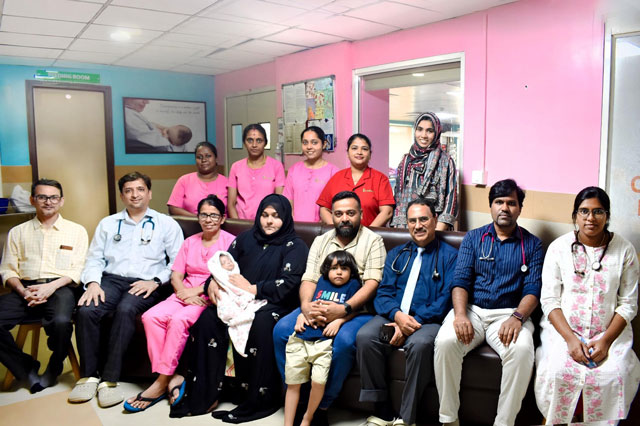
The baby’s remarkable recovery has become a source of inspiration for the entire NICU team and stands as a moving example of how advanced neonatal care, dedicated teamwork, and unwavering parental hope can come together to create a positive outcome. Babies born at 24 weeks are extremely premature, with several organs—including the lungs, brain, intestines, eyes, and immune system—still at a very early stage of development. The infant faced numerous hurdles during the hospital stay and required continuous monitoring, respiratory support, careful nutritional management, infection prevention, and coordinated multidisciplinary care.
The treating team included senior consultant paediatrician and chairman of Indiana Hospital Dr Ali Kumble, senior consultant neonatologist Dr Abhishek K Phadke, paediatric surgeon Dr Vijay Mahantesh S Samalad, and consultant paediatric interventional cardiologist Dr Satish Kumar B S, supported by the hospital’s dedicated NICU doctors, nurses, and allied healthcare professionals.
Dr Ali Kumble said the child’s recovery reflected the commitment of the entire hospital team and the availability of advanced neonatal facilities. “This baby’s journey represents courage, perseverance, and coordinated medical care. The outcome was possible because of timely intervention, advanced NICU facilities, continuous specialist supervision, and the tireless efforts of our doctors and nursing team. Caring for an extremely premature baby is a long journey filled with uncertainty,” he added.
Dr Abhishek K Phadke said that the complexity of caring for such babies is determined more by their gestational maturity than by their absolute birth weight. “In extremely premature babies, it is not merely the low birth weight that makes treatment difficult. A smaller gestational age means that every organ system is more immature and fragile. A baby born at 24 weeks is physiologically very different from a more mature baby of a similar weight. These babies are not simply smaller versions of full-term infants,” Dr Phadke explained.
The threshold of viability is generally considered to lie between 22 weeks and 25 weeks and six days of gestation, a period in which every additional day inside the womb can significantly influence survival and long-term outcomes. Not all babies born during this period survive, and some may face serious complications despite the best available treatment. The doctors emphasised that discharge from the hospital is an important milestone, but not the end of the child’s medical journey. Babies born extremely prematurely require strict and regular follow-up to monitor growth, nutrition, vision, hearing, neurological development, and achievement of developmental milestones.
The treating doctors added that a Level-3 NICU is only as strong as its nursing team and resident doctors. "The dedication of our NICU nurses and resident doctors deserves special recognition. Their compassion, patience, and unwavering commitment transform advanced neonatal care into meaningful recovery for our smallest patients," they noted. Indiana Hospital's Level IIIA NICU offers advanced neonatal ventilation, therapeutic hypothermia for HIE, sophisticated haemodynamic monitoring, round-the-clock neonatal critical care, an in-house paediatric surgeon, and cardiac and cardiac surgical expertise—facilities that together enable the management of some of the most critically ill newborns.
The successful outcome also highlights the availability of advanced neonatal intensive care facilities in Mangaluru for the management of extremely premature and critically ill newborns. However, doctors cautioned that outcomes at the limits of viability vary from baby to baby, and survival cannot be assured in every case even in the best centres. The team hopes that the story will convey a message of cautious optimism to society.