Daijiworld Media Network - Mumbai
Mumbai, Aug 25: Widespread panic among autorickshaw and taxi drivers over rumours of steep fines for failing to demonstrate working knowledge of Marathi triggered protests in several parts of Mumbai on Monday, disrupting public transport during the morning rush.
The protests came amid a Maharashtra government drive to assess the Marathi proficiency of autorickshaw, taxi and app-based cab drivers. The government has clarified that drivers are required to know only basic, work-related Marathi and are not expected to become language experts.
Demonstrations were reported in areas including Kandivali, Malad West, Santacruz, Dahisar and Andheri. At Laljipada in Kandivali West, a group of drivers staged a roadblock at around 9 am. Police reached the spot and dispersed the protesters. Reports said some protesters allegedly stopped other autorickshaw and taxi drivers, including app-based cab operators, from carrying passengers and forced some commuters to get down from vehicles. Some drivers also complained that protesters attempted to damage their vehicles.
The agitation was fuelled by rumours that drivers who could not speak Marathi would be fined between Rs 5,000 and Rs 20,000, while some reports put the alleged fines as high as Rs 25,000. A senior official at the Borivali Regional Transport Office said misinformation about such penalties had spread among drivers.
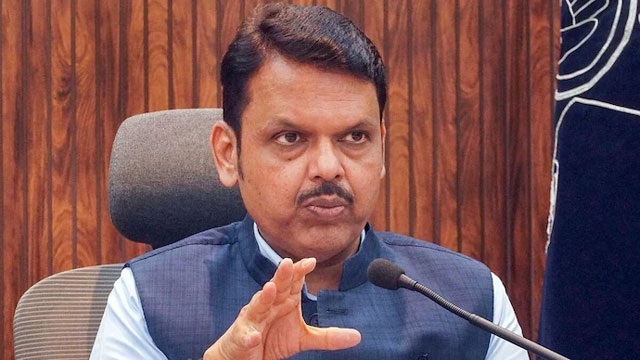
The disruption prompted Chief Minister Devendra Fadnavis to intervene and assure drivers that the government was not seeking fluency in Marathi.
"There is no reason to make them experts in Marathi. They should know work-related, basic Marathi," Fadnavis said, adding that drivers had already been given additional time to acquire the required language skills. He also said no driving licence had been cancelled over the requirement.
Transport Minister Pratap Sarnaik further clarified that RTO officials could not penalise drivers before the expiry of the one-month notice period. He warned that action would be taken against officials who imposed fines prematurely.
According to Sarnaik, the government resolution issued on August 12 provides a clear procedure. Drivers found without the required working knowledge of Marathi are first issued a one-month notice to learn the language. If they continue to fail to meet the requirement, their licence and badge can be suspended, with the driver getting a further three months to acquire the required proficiency. Failure to comply even after that period can lead to cancellation of the licence.
Sarnaik's clarification came after Shiv Sena leader Sanjay Nirupam met him and urged the government to stop the alleged fines. Nirupam claimed that some drivers were being fined up to Rs 25,000 without being given the stipulated one-month period.
The Transport Department's statewide language assessment began on August 20. On the first day, 8,217 commercial passenger vehicle drivers were tested and 1,268 drivers, mainly autorickshaw and taxi drivers, were issued notices for inadequate knowledge of Marathi. Of the drivers tested in the Mumbai Metropolitan Region, 604 were found lacking the required working knowledge.
On the second day, August 21, another 1,499 non-Marathi-speaking autorickshaw and taxi drivers across Maharashtra were issued notices. The exercise involves questions based on situations drivers encounter in their daily work, including destinations, fares, routes, travel time and digital payments, rather than testing formal or advanced Marathi.
The government has also said that more than 1.65 lakh non-Marathi-speaking autorickshaw and taxi drivers have attended Marathi classes so far.
Despite the clarifications, anxiety remained high among a section of drivers. A union leader said the protests were largely driven by fear among drivers who were unable to communicate in Marathi and worried that losing their licences or badges would affect their livelihoods.
He said no recognised autorickshaw or taxi union had issued a call for a strike or agitation, although groups of drivers had staged protests at several locations in Mumbai's western suburbs, where a sizeable number of non-Marathi-speaking drivers work.
Reports from Kandivali indicated that some drivers had announced a three-day protest, while the agitation also contributed to a shortage of autorickshaws and taxis in parts of Mumbai during the morning rush. Commuters, particularly those travelling to railway stations and workplaces, faced difficulties in finding transport.
The situation, however, largely returned to normal in the second half of Monday after the government clarified the rules and sought to dispel rumours surrounding the alleged fines.
The Maharashtra government's position is that the language requirement is intended to ensure basic communication between drivers and passengers in the local language, rather than impose a demand for advanced Marathi proficiency.