Daijiworld Media Network – Mangaluru (NJC)
Mangaluru, Aug 27: The Dakshina Kannada health and family welfare department has stepped up surveillance and preventive measures across the district amid the seasonal rise in influenza, including H1N1, while intensifying efforts to contain dengue and malaria.
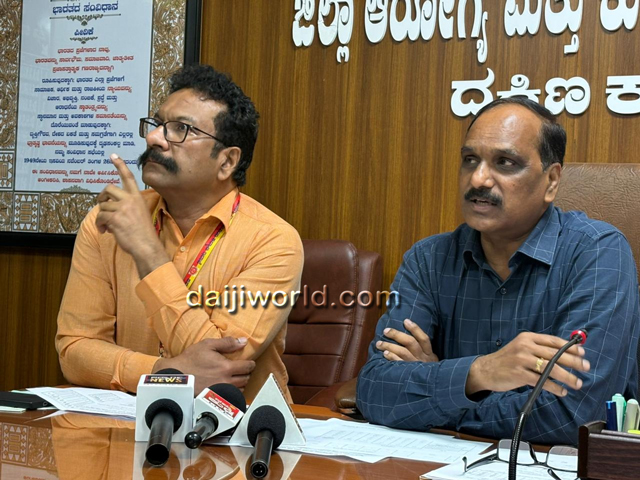
A press conference on H1N1 precautions was held at the office of the District health and family welfare officer here on Thursday. District health and family welfare officer Dr H R Thimmayya and District survey officer Dr Naveen Chandra Kulal briefed the media on the prevailing disease situation, preparedness and preventive measures.

Following an emergency meeting chaired by the Health Minister with senior district-level health, surveillance and medical officers, instructions were issued to create public awareness through the media and prevent confusion arising from unverified information.
H1N1, commonly known as swine flu, is a seasonal influenza infection that generally increases during colder weather and is commonly seen during January-March and July-September. The infection spreads from person to person through respiratory droplets when an infected person coughs, sneezes or remains in close proximity to others. The virus can spread rapidly in crowded areas.
According to Integrated Health Information Platform (IHIP) surveillance data, Dakshina Kannada recorded 87 laboratory-confirmed influenza cases from January 1 to August 25, 2026. The district recorded 71 cases during January-August 2025, while 207 cases were reported during the whole of 2025 and 208 cases in 2024.
The Health Department has strengthened surveillance of Influenza-Like Illness (ILI) and Severe Acute Respiratory Infection (SARI) cases. District hospitals, medical college hospitals and super-speciality hospitals have been identified as surveillance centres to facilitate early detection, diagnosis and treatment.
ILI generally includes symptoms such as fever, cough, throat irritation, headache and body ache. In severe cases, the infection can progress to pneumonia and cause serious breathing difficulties. Immediate hospitalisation is required if a patient develops difficulty in breathing.