Daijiworld Media Network - Jaipur
Jaipur, Sep 23: Former Rajasthan Chief Minister Ashok Gehlot has questioned the functioning of the Election Commission of India (ECI) following a report that Election Commissioners Sukhbir Singh Sandhu and Vivek Joshi had recorded objections to several decisions taken by the poll panel.
According to the report, the two Election Commissioners raised objections at least 14 times over a 10-month period on issues related to voter registration, deletion of names from electoral rolls and the centralisation of access to voter databases.
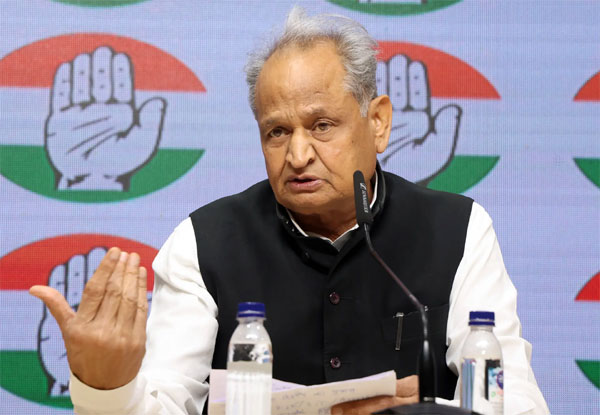
Reacting to the report, Gehlot said the concerns attributed to the two Election Commissioners reinforced questions that Congress leader Rahul Gandhi had previously raised about the functioning of the ECI.
“The entire country is aware of what is happening. There were concerns about the functioning of the Election Commission from the very beginning. Rahul Gandhi had repeatedly raised questions about the Election Commission, and now two of the Election Commissioners themselves have raised objections to decisions being taken within the Commission,” Gehlot said.
He said the issue was not confined to any individual but concerned the credibility and independence of a constitutional institution.
“If two members of the Election Commission are putting their objections on record and saying that important decisions were taken without their knowledge or approval, then this is a matter of serious concern. The country deserves to know how such decisions are being taken,” he said.
Gehlot also questioned the government's decision to amend the law governing the appointment of Election Commissioners and remove the Chief Justice of India from the selection panel.
“The independence of constitutional institutions is essential for democracy. When questions are being raised from within the Election Commission itself, these concerns cannot simply be ignored. There must be transparency and accountability,” he said.
He further said public confidence in the electoral process was at stake and stressed the need for younger generations to understand the importance of elections.
“People, especially the younger generation, need to understand what is happening. Elections are the foundation of democracy. If people's confidence in the electoral process is weakened, it affects the credibility of the entire democratic system,” Gehlot said.
He maintained that the latest developments warranted a transparent examination of the functioning of the poll panel.
“This is a much larger question about democracy and the future of the country. The Election Commission must function independently, transparently and in accordance with the Constitution and the law,” he said.
The Election Commission, however, rejected the suggestion that its decisions had been taken without the participation of the full Commission.
In a response issued on Wednesday, the ECI said differing views, observations and suggestions were a normal part of deliberations within a multi-member constitutional body. It maintained that decisions taken over the past year, including those relating to electoral-roll revision and the Special Intensive Revision (SIR), were unanimous decisions of the full Commission.
The poll panel said written notes, technical suggestions and internal checks and balances were part of the established decision-making process and were intended to ensure transparency, legal compliance and operational rigour.
The ECI also said that focusing on individual internal notes and observations over a 10-month period without considering the wider body of decisions and initiatives presented only one part of the picture. It maintained that its official orders and decisions had full legal sanction and followed established procedures.