Daijiworld Media Network - Washington
Washington, Sep 26: US President Donald Trump has rejected an Iranian proposal for a seven-day ceasefire in the ongoing conflict in West Asia, The Wall Street Journal reported, citing US officials.
According to the report, Trump has told his aides that he expects to resume bombing Iran after the US midterm elections. The development comes days after Trump warned in his address to the United Nations General Assembly that he faced a choice between reaching a deal with Iran and “annihilating” the Islamic Republic.
“I have a big decision to make. Will a deal be made with Iran that lets them rebuild and create a far greater country than it ever was before? Maybe one of the greatest in the Middle East or even the world. Or do I annihilate the Islamic Republic, and do it quickly, never giving them a chance to kill and destroy people and countries again?” Trump said in his UN address on September 22.
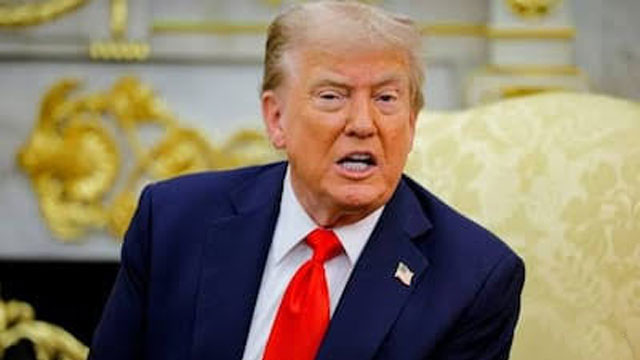
He added that he believed a deal would be reached after the US election, saying there was no reason for Iran not to agree to one.
Iranian Foreign Minister Seyed Abbas Araghchi said on Thursday that Tehran had proposed a seven-day plan to end the conflict. Under the proposal, Iran would reopen the Strait of Hormuz by the end of the seventh day, provided certain conditions were met, followed by comprehensive talks on its nuclear programme.
Speaking to reporters at the UN General Assembly, Araghchi said Iran had conveyed the proposal to the United States through intermediaries. He said the plan was similar to a memorandum of understanding reached between the two countries in June.
“We have introduced a plan to the United States through the intermediaries that if certain conditions are met, the Strait of Hormuz would be open on the end of the seventh day and talks would restart,” Araghchi said.
He also said it would be preferable for an agreement to be reached before the US midterm elections.
During a meeting with German Foreign Minister Johann Wadephul, Araghchi said Iran had conveyed what it considered reasonable conditions and requirements to the US for advancing diplomacy. He maintained that restoring security in the region required an end to what Tehran described as US interventionist and aggressive actions against Iran.
Araghchi also reiterated Iran’s stated commitment to diplomacy over its nuclear programme. He accused the United States and Israel of military aggression against Iran during negotiations and rejected what he described as attempts to hold Iran responsible for insecurity in the Strait of Hormuz.
Meanwhile, Iranian President Masoud Pezeshkian, in an interview with Fox News, blamed Trump and the United States for the failure to implement a settlement that he said had been reached between the two sides in June.
“We did reach an agreement with your president, that agreement was signed, and based on that, we are willing and still wish to move forward,” Pezeshkian said.
He claimed that Iran had not closed the Strait of Hormuz and alleged that the United States had chosen military action instead of dialogue.
“We are ready,” Pezeshkian said, reiterating Iran’s stated willingness to engage in talks.
The reported rejection of the ceasefire proposal comes amid heightened tensions between Washington and Tehran, with diplomatic efforts continuing alongside military confrontation in the region.