Daijiworld Media Network - Jerusalem
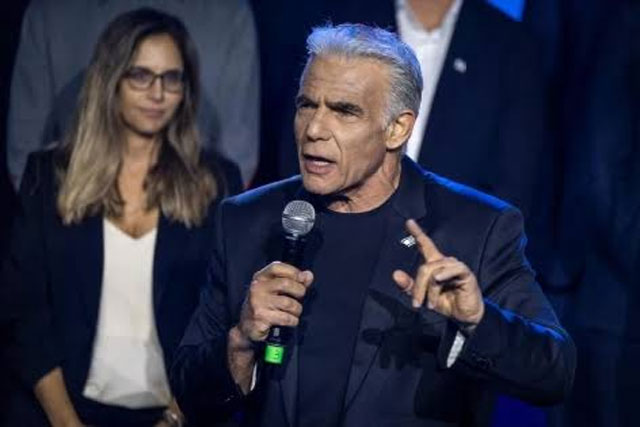
Jerusalem, Sep 30: Israel's opposition leader Yair Lapid has accused Prime Minister Benjamin Netanyahu of “fear-mongering” after Netanyahu warned that the country's enemies could attempt an attack ahead of the October 27 general election.
Lapid, who heads the Yesh Atid party, made the remarks after meeting Netanyahu on Tuesday. He had sought an urgent security briefing following the prime minister's warning.
Netanyahu had posted a video showing him at a military base in front of a fighter jet, saying there were “indications that, ahead of the elections, our enemies will try to attack us”. He did not identify the enemy he was referring to.
In recent weeks, Netanyahu has issued warnings to Iran, Hamas, Hezbollah and the Palestinian Authority and said Israel would retaliate in the event of an attack.
After the security briefing, Lapid said he was certain the election would take place on time and that there was “no reason to panic the public”. He said security threats should be handled professionally and responsibly.
Lapid also criticised Netanyahu for using military bases in campaign videos and referred to warnings that he said were ignored before the Hamas-led October 7, 2023 attacks. Netanyahu and his government have faced continued political criticism over the security failures surrounding the attack.
Netanyahu, in a separate online post, said he had held a security briefing with Lapid and raised alerts about possible attacks “on the various fronts ahead of the elections”. He added that he regularly holds security briefings with the opposition leader.
The October 27 election will be Israel's first national vote since the October 7, 2023 attacks, which triggered the subsequent war in Gaza and wider regional conflicts. Netanyahu, Israel's longest-serving prime minister, is seeking another term amid a closely contested campaign.
Lapid is among several opposition figures seeking to challenge Netanyahu. Opposition leaders, including Lapid and former military chief Gadi Eisenkot, have agreed to coordinate their efforts to increase turnout and seek a parliamentary majority.
Recent polling has shown a closely contested race, with the composition of the next 120-member Knesset depending on the distribution of seats among the competing parties and their ability to form a governing coalition.