Daijiworld Media Network – Mumbai
Mumbai, Oct 2: For many engineering graduates, securing a job with the Indian Space Research Organisation (ISRO) would be a dream come true. For Manoj Meena, however, it became a difficult choice between a secure career and an uncertain entrepreneurial dream. He chose the latter, a decision that eventually led to the creation of Atomberg Technologies, a consumer technology company with revenue of nearly Rs 1,300 crore.
Meena, who studied Electrical Engineering at IIT Bombay, had secured a job at ISRO after completing his education. His parents were delighted with the opportunity, but Meena had other plans. He wanted to build products that could solve everyday problems rather than follow a conventional career path. According to an interview cited by Moneycontrol, Meena initially told his parents that he would join ISRO after taking an extension, but that one-year plan eventually turned into a much longer entrepreneurial journey.
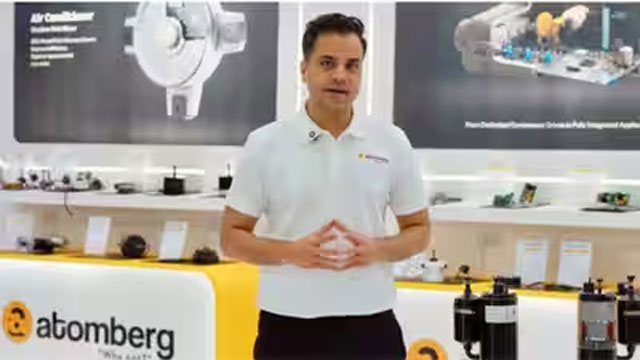
In 2012, Meena began working on his entrepreneurial ambitions. His journey was far from an overnight success. Between 2012 and 2015, he and his future co-founder Sibabrata Das experimented with several business ideas, most of which failed to gain traction. They worked on projects involving motor control, data acquisition and vehicle tracking while operating with limited resources.
The breakthrough came from an everyday household appliance — the ceiling fan.
While discussing the lack of technological innovation in conventional fans, Meena and Das identified an opportunity to make them more energy efficient. Meena's experiences growing up in rural Rajasthan, where access to electricity could be unreliable, also influenced his interest in energy-saving technology. The duo began developing fans using Brushless Direct Current (BLDC) motor technology.
Their work eventually resulted in the development of the Gorilla fan, which used a 28-watt motor and offered significantly greater energy efficiency than conventional fans consuming around 75–80 watts, according to reports. The product was launched under the Atomberg brand, marking a major turning point in the company's journey.
But developing an innovative product was only one part of the challenge. The founders had to convince customers to buy a relatively expensive product from an unknown startup, while competing against established brands. The company also faced difficulties in developing a manufacturing ecosystem capable of supporting its technology.
The biggest crisis came in 2019, when Atomberg was reportedly close to running out of money. The company had only enough funds to cover about a month's expenses, with salaries and vendor payments becoming a major concern. After several unsuccessful funding discussions, the founders eventually secured fresh investment, giving the company the opportunity to continue its journey.
Meena and his team subsequently expanded Atomberg beyond energy-efficient ceiling fans. The company's portfolio now includes products such as mixer grinders and water purifiers, while its B2B arm works on efficient motors, drives and control technologies. Meena has described his approach as building an India-first engineering and technology platform rather than limiting the company to a single product category.
The transformation has been significant. Atomberg's revenue from operations rose to Rs 1,293.8 crore in FY2026 from Rs 959.5 crore in FY2025, according to Moneycontrol. The company, however, continued to report a loss, showing that its rapid revenue growth has also come with substantial expenses.
Meena's journey has also earned recognition in India's business community. The Economic Times included him among its 40 Under Forty business leaders in 2024. He has said that success, for him, lies in achieving small wins while solving problems for ordinary people and contributing to a better world.
From turning down a secure ISRO career to surviving failed ideas, financial crises and the challenges of building a new product category, Manoj Meena's journey reflects the uncertainty behind entrepreneurship. His story demonstrates how persistence, engineering-led problem-solving and the willingness to continue despite setbacks can turn an uncertain experiment into a large technology business.