Daijiworld Media Network - Washington
Washington, Oct 3: US President Donald Trump has threatened to “charge” South Korea “more” if Seoul does not agree to invest in a liquefied natural gas (LNG) project in Alaska, which he has said the Asian country will participate in.
Trump made the remarks during a press availability at the White House, two days after unveiling the first package of South Korea's US investment projects under last year's bilateral trade deal.
The package, according to Trump, includes the Alaska LNG project, construction of a gas-fired power plant in Texas and eight large-scale nuclear power plants.
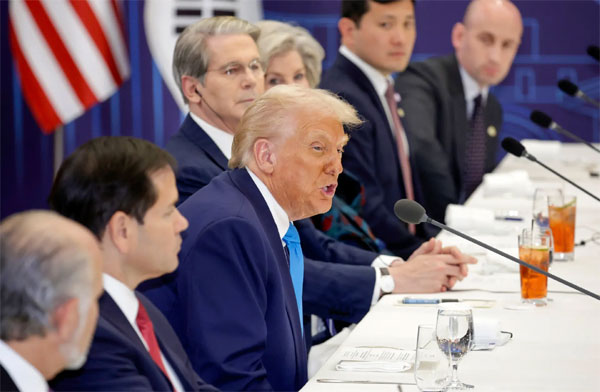
On the Alaska LNG project, South Korea has said it has not yet finalised a decision on whether to participate, Yonhap News Agency reported.
“I didn't jump the gun. I mean, they were there and they were represented,” Trump told reporters. “And let's see, if they don't want to do it, that's okay with me. I'll just charge them more.”
After asking a reporter whether South Korea had said it had not signed the agreement, Trump added, “Tell them if they don't sign shortly, I'm going to double it up.”
It remains unclear what Trump meant by “charge” South Korea and what additional cost Seoul could face if it does not agree to invest in the Alaska project.
US Commerce Secretary Howard Lutnick has said South Korea will invest more than $50 billion in the Alaska project.
The LNG project involves construction of a 1,298-km pipeline from Alaska's North Slope, which has massive proven natural gas reserves, to southern Alaska. The pipeline would transport natural gas that would then be cooled into liquid form for shipment to Asian markets.
Meanwhile, a senior White House official underscored the need for shipbuilding cooperation with South Korea and Japan as the Trump administration seeks to rebuild the US shipbuilding industry and strengthen the country's naval capabilities.
Russell Vought, director of the White House Office of Management and Budget, made the remarks during a forum in Washington, while also highlighting the need to reward companies that invest and establish operations in the United States.