Daijiworld Media Network - Washington
Washington, Oct 8: Isaias strengthened into the first hurricane of the Atlantic season late Wednesday as it moved towards the US Gulf Coast, with forecasters warning of heavy rainfall and possible flash flooding.
The National Hurricane Center said Isaias was expected to make landfall between the Mississippi coast and the Florida Panhandle late Friday or early Saturday. The storm was located about 460 miles south-southwest of the Mississippi River and had maximum sustained winds of around 75 mph.
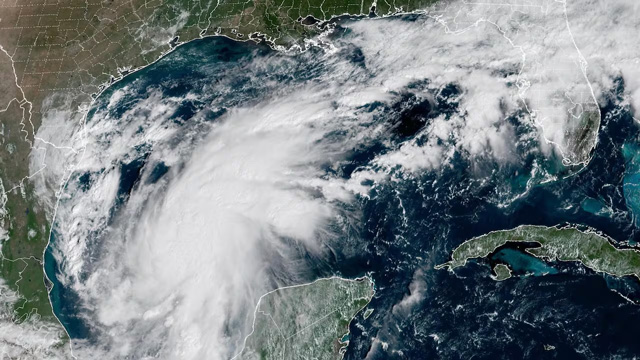
Isaias formed more than four months into the Atlantic hurricane season, coming close to a 121-year-old record for the latest formation of the season's first hurricane. According to the National Weather Service, the record was set in 1905, when the first Atlantic hurricane formed on October 8.
The Atlantic hurricane season has been unusually quiet this year, with a strong El Niño contributing to conditions that disrupt storm formation over the ocean.
Several Gulf oil wells have already halted production, while governors in Florida and Alabama declared states of emergency across dozens of counties.
The storm is approaching a coastline that has experienced several major hurricanes. Hurricane Camille killed more than 250 people after striking near Waveland, Mississippi, in 1969.
Hurricane Katrina devastated parts of Mississippi and flooded New Orleans in 2005, killing nearly 1,400 people, while Hurricane Michael caused widespread destruction near Panama City, Florida, in 2018.
The storm has also disrupted oil production in the Gulf of Mexico, which accounts for nearly 15% of annual US crude oil output. About 25% of regional oil production, equivalent to around 511,000 barrels per day, had been temporarily halted by Wednesday, according to the Marine Minerals Administration. Eight of the Gulf's 371 manned oil platforms had also been evacuated.
With oil prices already elevated, the production shutdowns could affect markets, although previous Gulf hurricanes have caused larger disruptions, said Jim Burkhard, global head of crude oil market research at S&P Global Energy.
Burkhard said the greater concern would be if Isaias made landfall as a powerful storm near major refineries, adding that the oil market risk was moderate but increasing.