Daijiworld Media Network - Dubai
Dubai, Oct 15: Two cargo vessels have sunk near the Strait of Hormuz within 24 hours after being struck by projectiles in separate incidents, maritime officials said on Wednesday, raising fresh concerns over the safety of commercial shipping in the region.
The Singapore-flagged container ship GFS Pride sank while sailing through the strait on Tuesday after sustaining damage and catching fire. All 21 crew members were safely evacuated, with no injuries reported, according to the Maritime and Port Authority of Singapore (MPA).
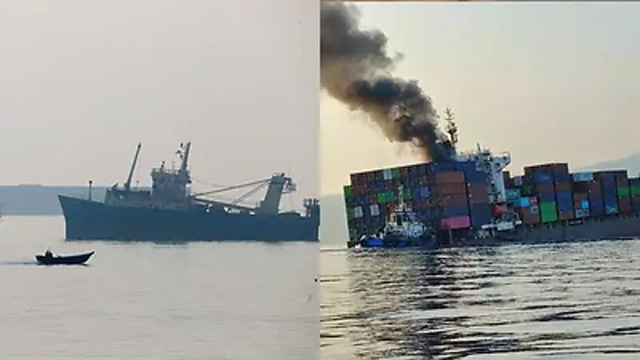
The vessel had a capacity of 2,824 twenty-foot equivalent units (TEU). Its UAE-based manager, GFS Ship Management FZE, could not be immediately reached for comment.
In a separate incident, the Antigua and Barbuda-flagged dry bulk carrier Cape Dao sank near the strait, weeks after it was struck by a projectile on September 23, according to data from the International Maritime Organization (IMO).
One crew member was killed in the earlier attack, while the remaining crew members were evacuated immediately after the strike, maritime sources said. The vessel’s UAE-based manager, Peonies Shipmanagement FZE, could not be immediately reached for comment.
The GFS Pride and Cape Dao are the second and third vessels to have sunk since the US-Iran war began on February 28, according to an analysis of IMO casualty data. The Malta-flagged container ship Safeen Prestige, which was struck by a projectile in March, later sank north of the Strait of Hormuz.
The MPA expressed deep concern over the continuing attacks on commercial shipping in the waterway, describing them as unprovoked, unjustifiable and a breach of international law.
Maritime risk management company MARISKS said the latest incidents highlighted the continuing threat to vessels transiting the Strait of Hormuz. It noted that the danger was not limited to oil tankers, as container ships and bulk carriers were also suffering serious damage.
Tensions around the strategic waterway have escalated over the past 10 days, with Iran saying it is intensifying attacks in response to the US blockade of its ports and tighter sanctions introduced last month.
Before the war, around one-fifth of global oil and liquefied natural gas trade passed through the Strait of Hormuz. Security concerns have intensified as Tehran seeks to tighten its control over the waterway following US and Israeli strikes on Iran on February 28.
Two senior Iranian officials told that Iran was increasingly using new tactics against vessels transiting the strait as it seeks to keep oil prices elevated and influence the US midterm elections.
While Iran and the United States have focused much of their attacks on tankers, cargo and container vessels have also been targeted, immobilised or sunk.