Daijiworld Media Network - Tehran
Tehran, Nov 25: A top Iranian military commander has warned that any future war involving Iran may not be confined to the West Asia region, asserting that the country's missile capabilities have no geographical limitations.
Chief Commander of the Islamic Revolutionary Guard Corps (IRGC) Ahmad Vahidi made the remarks on the sidelines of a ceremony in Tehran, according to the official Iranian news agency IRNA.
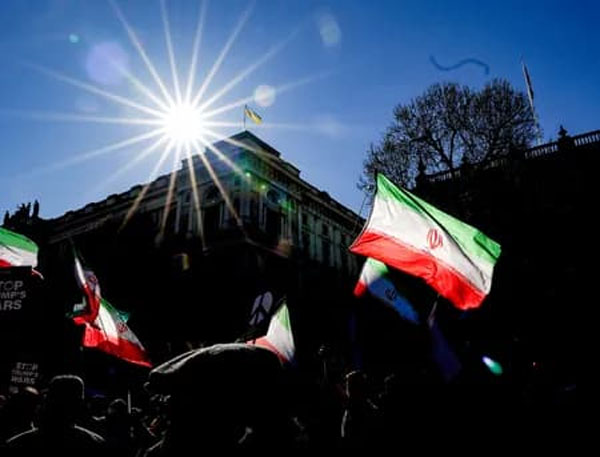
"There is no geographical limitation on increasing the range of Iran's missiles," Vahidi said, adding that future military capabilities would be expanded according to the country's requirements and capacities.
"Today, the war will not be necessarily limited to the region, and these capabilities will be expanded in proportion to the requirements and capacities," he said.
Separately, Chief of Staff of the Iranian Armed Forces Ali Abdollahi said on Tuesday that US military bases anywhere in the world could come within the range of Iranian forces if required, Xinhua news agency reported, quoting the semi-official Fars news agency.
Meanwhile, the IRGC Navy claimed that four oil tankers described as "violating" vessels exploded and caught fire after hitting naval mines in the Strait of Hormuz on Monday and Tuesday.
In separate statements, the naval force warned vessels against using "unauthorized" routes through the strategic waterway in defiance of warnings issued by the Iranian Armed Forces. It said such actions amounted to violations and cooperation with "aggressive" forces, warning that they would be dealt with decisively.
The Iranian Army's Navy also said on Tuesday that two oil tankers had caught fire earlier in the day after striking naval mines east of the Strait of Hormuz.
According to a statement published on the army's website, the vessels had switched off their identification and navigation systems before entering a prohibited area east of the waterway.
The explosions reportedly brought both tankers to a halt. The navy stressed that vessels must comply with Iranian regulations to ensure safe passage through the strategically important strait.
The developments come amid escalating tensions following joint attacks launched by Israel and the United States on Tehran and other Iranian cities on February 28.
Iran retaliated with waves of missile and drone strikes targeting Israel and US military bases and assets across the region, while also tightening its control over the Strait of Hormuz.