Daijiworld Media Network - Washington
Washington, Dec 17: A US federal appeals court has rejected a challenge filed by an Indian national against a deportation order issued by the Department of Homeland Security (DHS), ruling that the alleged procedural lapses cited in the case did not result in any legal prejudice.
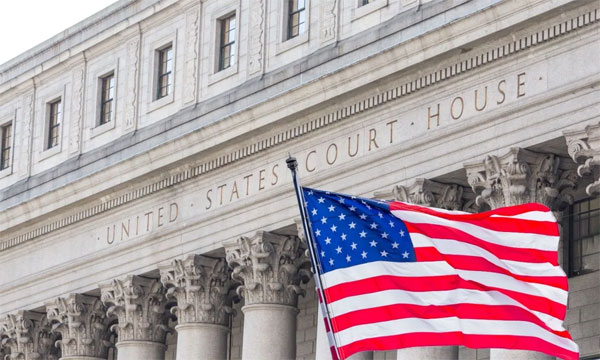
In a non-precedential decision dated December 15, a three-judge bench of the US Court of Appeals for the Seventh Circuit declined to overturn the final administrative removal order against Karanpreet Singh, stating that he failed to show how the claimed errors affected the outcome of his case.
Singh, an Indian citizen who holds permanent residency in Canada, entered the United States from Canada in November 2021 on a visitor visa. In April 2024, he pleaded guilty to conspiracy to possess methamphetamine with intent to distribute, following which a federal court sentenced him to five years in prison.
Subsequently, in December 2024, DHS issued Singh a notice indicating its intent to proceed with expedited administrative removal, citing his conviction for an aggravated felony under US immigration law. Singh responded within days, requesting removal to Canada and arguing that his case should be heard by an immigration judge rather than resolved through administrative proceedings. He also urged authorities to issue a detainer instead of a final order so that he could seek sentence reductions under the First Step Act.
About ten weeks later, DHS issued a final order directing that Singh be removed to “India and/or Canada or any alternate country” permitted under immigration statutes.
Before the appeals court, Singh alleged multiple procedural violations, including the failure to provide a list of free legal aid services, the absence of a Punjabi translation of the notice, insufficient time to respond, and the government’s refusal to limit removal solely to Canada. The court noted that even assuming such lapses occurred, Singh was not entitled to relief unless he could show actual harm caused by those errors.
The judges emphasised that Singh did not contest his aggravated felony conviction, which makes non-citizens conclusively removable under the law. As a result, the panel said, any procedural shortcomings did not alter the inevitability of the removal decision.
The court also dismissed Singh’s argument that DHS improperly disregarded his request to be deported only to Canada, observing that the agency had not yet made a final determination on the country of removal and that any alleged injury was speculative at this stage.
Additionally, the bench rejected Singh’s claim that the removal order interfered with his ability to earn sentence credits under the First Step Act, calling the argument irrelevant to the question of removability.
Under US law, administrative removal allows authorities to swiftly deport non-citizens convicted of aggravated felonies without proceedings before an immigration judge. Courts have repeatedly held that individuals in such cases are generally ineligible for discretionary immigration relief.