Daijiworld Media Network - Raipur
Raipur/Bijapur, Feb 13: In a significant blow to Maoist networks in Chhattisgarh, security forces carried out a major anti-Naxal operation in Bijapur district on Friday, recovering explosives, arms-related materials and dismantling insurgent infrastructure.
A joint team of the Central Reserve Police Force (CRPF) and its commando battalion launched the operation in the Tadpala Hills area under Usur Police Station limits, a region long considered a Maoist stronghold in the Bastar division. The mission was aimed at disrupting extremist activities and strengthening area domination efforts.
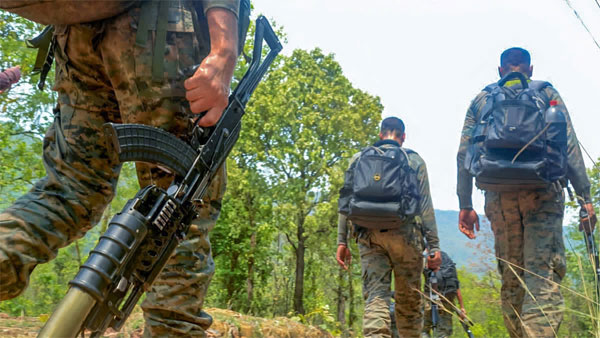
During combing operations, personnel unearthed explosives and logistical supplies concealed underground in plastic and iron drums at two separate locations. The recovered materials included 13 detonators, 11 kilograms of gunpowder, multiple plastic and steel drums, along with Maoist uniforms, footwear, caps, lanyards, USB cables, solar panels and insurgent literature. Officials said the cache indicated the site was being used as a storage base to sustain prolonged guerrilla operations.
Security teams also located and neutralised several improvised explosive devices planted in the area. Among them were 13 IEDs fitted inside beer bottles with pressure-switch mechanisms and a directional IED fabricated within an iron pipe. All explosive devices were defused and destroyed on the spot following established safety protocols to eliminate any risk to personnel or civilians.
In a symbolic assertion of control, forces demolished a Maoist memorial structure in the Tekmetla Kunjampara area, often used by insurgents as a rallying point. Authorities described the operation as a key step in weakening Maoist logistics and operational capabilities in remote forested terrain.
Chhattisgarh’s Bastar region, including Bijapur, has seen intensified anti-insurgency efforts in recent years, supported by coordinated intelligence-based operations. Officials said the latest action not only disrupts supply chains and eliminates potential threats but also reinforces efforts to restore peace, boost public confidence and pave the way for development in the region.