Daijiworld Media Network – Mangaluru/Udupi
Mangaluru/Udupi, Feb 27: The frequent appearance of leopards in residential areas across the undivided Dakshina Kannada district has triggered widespread panic. Once restricted to deep forests, these wild cats are now regularly spotted entering house compounds and carrying away poultry and stray dogs.
The movement of leopards has been reported in Mangaluru, Sullia, Moodbidri, Beltangady, Bantwal, Ullal, Kundapur, Karkala, and Byndoor. In the past week alone, sightings in the Shaktinagar and Maroli areas of Mangaluru city have kept residents and motorists on high alert.
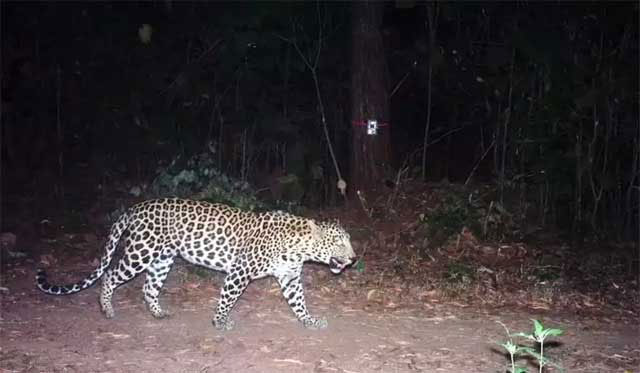
Experts note that the period from November to February is the breeding season for leopards, leading to increased movement. A leopard can travel up to 22 km in a single day. P Sridhar, the Karkala range forest officer, stated that leopards frequent areas where poultry and meat waste are easily available. He urged the public not to dispose of such waste in open spaces.
Wildlife veterinarian Dr Yashaswi Naravi emphasized that leopards generally fear humans but may attack in self-defence if provoked. "Residents in affected areas should minimize night-time travel or remain extremely vigilant. Leopards have a right to exist, but human expansion into their habitats is bringing them into closer contact with us," he said.
Wildlife experts have identified six primary reasons for the apparent surge in leopard encounters. One of the key factors is the expansion of human settlements, as residential areas are increasingly encroaching upon hills and semi-forest regions that were traditionally leopard habitats.
Another reason is increased night mobility. With better vehicle availability, more people are out at night, leading to frequent encounters that were previously rare. The pervasive use of technology has also contributed to the rise in reported sightings, as the widespread use of smartphones allows citizens to capture and share footage of leopards instantly.
In addition, CCTV surveillance has played a major role, with high-definition cameras installed in homes and streets now recording leopard movements that earlier went unnoticed. Crop expansion, particularly the increase in rubber and other commercial crop plantations, provides ideal cover for leopards to move closer to human habitations.
Experts have also pointed to prey availability as a significant factor, noting that a rise in the population of peacocks and stray dogs attracts leopards to the outskirts of towns and villages for hunting.
While there is no official data confirming a massive spike in the leopard population, the number of captures indicates significant activity in the region. In Dakshina Kannada district, 62 cages were placed, 15 leopards were captured, and 5 fatalities were recorded. In Udupi district, 55 cages were placed, 33 leopards were captured, and 2 fatalities were reported.
The forest department has urged citizens to report any sightings immediately and refrain from taking the law into their own hands.