Daijiworld Media Network – Kundapur
Kundapur, Mar 6: Cage fish farming is attracting fishermen and unemployed youth. Over the past three years, under the SC-SP scheme, six Scheduled Caste families from Talluru in Kundapur taluk have successfully reared ‘Kalase’ fish in cages this season.
Under the Scheduled Caste Sub-Plan (SC-SP), cage fish farming is being promoted by the Mangaluru Regional Centre of the Central Marine Fisheries Research Institute (CMFRI). Yogeesh, Sadananda, Pavithra, Yamuna, Indira and Manjunath from Talluru are the beneficiaries of the scheme and have successfully reared Kalase fish in cages.
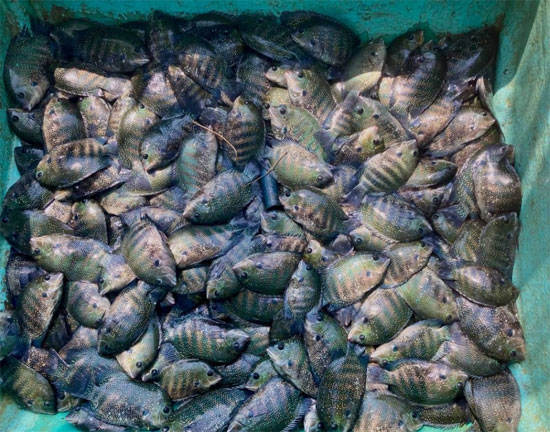
The success of the initiative was supported by Dr Rajesh K M, principal scientist; Dr Sujitha Thomas; Dr Bindu Sulochanan; senior scientists Dr Purushothama and Dr Divya Vishwambaran; and scientist Dr Sunil from the CMFRI Mangaluru Regional Centre.
Under the SC-SP scheme and with guidance from CMFRI, 18–20 members from six Scheduled Caste families in Talluru installed two cages in the Talluru river and released 1,500 fish seed weighing half a gram each. The harvesting process was carried out last week, and the fish had grown to weights ranging from 150 grams to 200–250 grams.
Fisherman Yogeesh of Talluru said that they have been engaged in cage fish farming for the past three years and are earning the expected income. “We will continue cage farming in the future as well,” he said.
Known as ‘Kalase’ in Udupi and Kundapur regions, ‘Irpe’ in Mangaluru, and ‘Pearl Spot Fish’ in English, the fish is popularly called ‘Karimeen’ and is the state fish of Kerala. It is commonly found in backwaters and estuaries.
Rearing this fish in river-based cages with artificial feed is rare, and the experiment has proven successful. Kalase has good demand in Kerala, Goa and local markets, fetching a market price of Rs 350–400 per kilogram.
Cage fish farming, which began in 2008–09 with two cages in Uppunda, has now spread across coastal Karnataka, with an estimated 1,000 cages currently in operation. This year, as a new experiment, six beneficiaries under the SC-SP scheme took up Kalase fish farming, and within 10 months, the fish achieved good quality weight, said Dr Rajesh K M, principal scientist, CMFRI Mangaluru Regional Centre.
Ravi Kharvi of Talluru, a cage fish farmer, said that he has been practising cage fish farming for 12 years under the guidance of CMFRI. He has successfully reared Kembere, Kurudi, Silver and Indian Pompano fish, as well as Pachile cultivation. “Through new innovations, better income can be earned. Cage farming can help unemployed youth build a self-reliant life,” he said.