Daijiworld Media Network - Dubai/Jerusalem
Dubai/Jerusalem, Mar 9: Iran on Monday named Mojtaba Khamenei, son of late supreme leader Ali Khamenei, as the country’s new supreme leader, signalling that hardline leadership remains firmly in control in Tehran amid the ongoing conflict involving Iran, the United States and Israel.
The announcement was made by Iran’s Assembly of Experts, an 88-member clerical body responsible for appointing the supreme leader.
“By a decisive vote, the Assembly of Experts appointed Ayatollah Seyyed Mojtaba Hosseini Khamenei as the third leader of the sacred system of the Islamic Republic of Iran,” the assembly said in a statement issued shortly after midnight Tehran time.
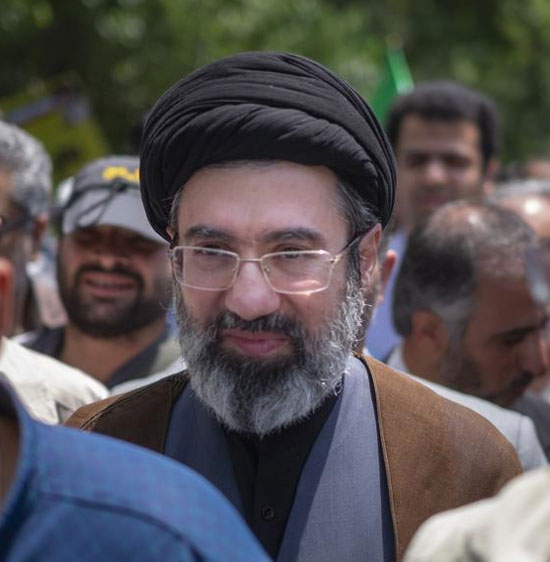
The position of supreme leader is the most powerful office in Iran, giving Mojtaba the final authority over the country’s political, military and religious institutions.
Mojtaba Khamenei, a mid-ranking cleric, has long been considered one of the most influential figures within Iran’s political establishment. He has strong ties with Iran’s security forces and oversees extensive political and business networks built during his father’s leadership.
His appointment comes after his father, Ali Khamenei, was reportedly killed in one of the initial strikes launched against Iran during the ongoing US-Israel military campaign that began more than a week ago.
The decision is expected to further intensify tensions with Washington. US President Donald Trump had earlier suggested that the United States should have a say in the selection of Iran’s next leader.
“If he doesn’t get approval from us, he’s not going to last long,” Trump said in remarks to US media.
Israel had also warned that any newly appointed Iranian leader could become a potential target as its military campaign against Iran continues.
Meanwhile, fighting between Iran and the US-Israel alliance has intensified. The US military confirmed that a seventh American soldier died from wounds sustained during Iran’s retaliatory attacks earlier in the conflict.
Iran’s ambassador to the United Nations said the US-Israeli strikes have killed at least 1,332 Iranian civilians and injured thousands more.
Iranian parliament speaker Mohammad Bagher Qalibaf said Tehran was not seeking a ceasefire and vowed that the country would respond firmly to what he described as aggression.
Israel has continued targeting senior Iranian figures. The Israeli military said Abolqasem Babaian, recently appointed head of the military office of the supreme leader, was killed in an airstrike on Saturday.
Residents in Tehran reported thick black smoke rising over parts of the city after strikes targeted oil storage facilities. The attacks lit up the night sky with large flames and raised fears of environmental damage.
Iran’s foreign ministry spokesperson Esmaeil Baghaei described the strikes as a ‘dangerous new phase’ of the conflict and accused Israel of committing a war crime by targeting fuel depots.
However, Israeli military spokesperson Lieutenant Colonel Nadav Shoshani said the facilities were legitimate military targets because they were used to support Iran’s missile programme and war operations.
Israeli Prime Minister Benjamin Netanyahu said Israel would continue its campaign against Iran’s leadership.
“We have an organised plan with many surprises to destabilise the regime and enable change,” Netanyahu said in a video statement.
The conflict has also begun to impact global markets, energy prices and international air travel as tensions across the Middle East continue to rise.