Daijiworld Media Network – Dubai/Tehran
Dubai/Tehran, Mar 13: Dubai witnessed a tense moment when debris from a successfully intercepted missile struck a building along the city’s iconic Sheikh Zayed Road, underscoring how the widening conflict between Iran, the United States, and Israel is affecting Gulf states. UAE authorities reported that air defence systems intercepted 10 ballistic missiles and 26 drones in a single wave of attacks aimed at the country. While the interceptions prevented the projectiles from reaching their intended targets, fragments fell across multiple locations in Dubai, including the building on Sheikh Zayed Road. Emergency services confirmed that no injuries occurred in this incident, though the event briefly alarmed residents and commuters.
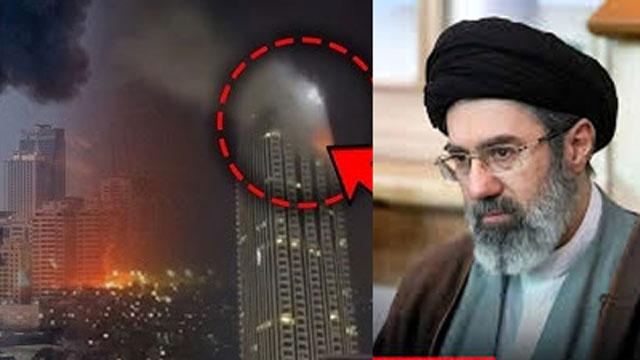
Military officials noted that the UAE’s sophisticated air defence network has been operating continuously to detect and neutralise incoming threats. Since the escalation began in late February, hundreds of missiles and more than a thousand drones have been intercepted, preventing widespread damage. Still, debris from destroyed missiles and drones poses an unpredictable danger, with fragments sometimes striking buildings, vehicles, and open areas.
Authorities emphasized that emergency response teams secured the Sheikh Zayed Road site quickly and reopened surrounding areas. Residents, accustomed to Dubai’s reputation as one of the safest cities in the world, have been unsettled by the sounds of missile alerts and interception explosions. Businesses and schools have taken precautionary measures, while the UAE government continues to provide transparent updates, urging residents to follow official communication channels. Analysts suggest that the attacks on Gulf nations are part of Iran’s broader strategy to demonstrate regional reach amid its confrontation with the US and Israel. Critical infrastructure, energy facilities, and shipping routes, particularly through the Strait of Hormuz, remain at risk, with global energy markets closely monitoring developments.
Meanwhile, in Iran, reports from British tabloid The Sun indicate that the country’s newly appointed supreme leader, Mojtaba Khamenei, is in a coma and has suffered severe injuries, including the loss of at least one leg, following an air strike that killed his father, Ayatollah Ali Khamenei. The 56-year-old leader is reportedly receiving treatment under tight security at Sina University Hospital in Tehran, overseen by veteran trauma surgeon and health minister Mohammad Reza Zafarghandi. Sources claim Khamenei has also sustained serious stomach or liver damage, though it remains unclear whether the injuries occurred during the February 28 strike.
Despite his incapacitation, Iranian state television broadcast a statement attributed to Khamenei, warning that Iran would avenge the blood of its citizens and continue military operations targeting regional shipping routes, including threats to close the Strait of Hormuz. Analysts suggest Iran’s military operations may continue without direct leadership, relying on systems established by his father, Ayatollah Ali Khamenei.
The simultaneous intensification of hostilities in the Gulf and uncertainty in Iran’s leadership has heightened global concerns over regional stability. The UAE’s air defence successes show the effectiveness of its systems, but incidents like the debris strike on Sheikh Zayed Road highlight the inherent risks of modern aerial warfare. Meanwhile, the reported condition of Iran’s new Supreme Leader adds a layer of unpredictability, as analysts warn that ongoing operations and missile launches could have serious geopolitical and energy market implications worldwide.
For residents in Dubai, Tehran, and the wider Gulf region, the situation underscores the reality that regional conflicts, even when fought miles away, can have direct and immediate consequences for civilian life, infrastructure, and international stability.